Blue Lock: Rivals goalkeeper controls decide how quickly you react, claim possession, and start a counter in the five-a-side format. Master the functions below to make every save, pass, and save sound more effective.
Goalkeeper Control Fundamentals
Blue Lock: Rivals is a fan-made 5v5 Roblox football experience with a server size of 10, so the goalkeeper is a real player rather than an NPC. Your positioning, distribution, and ability use directly affect whether a possession becomes a dangerous attack. Understanding the control functions by purpose is more useful than memorizing undocumented buttons.
The official Blue Lock: Rivals game page as of November 2026 identifies the experience as an unofficial tribute and confirms the five-on-five structure. It also notes that players select a Style before entering a match, and that choice determines which abilities become available. Because exact control labels can change between platforms or versions, describe inputs by function instead of relying on fixed key letters.
| Control function | What it is for | Why it matters in 5v5 |
|---|---|---|
| Shot reaction | Committing toward a shot or incoming ball | Prevents hesitation when a striker creates a clear opening |
| Movement and positioning | Adjusting position before the attack develops | Keeps the goal protected without wasting forward space |
| Possession handling | Securing or releasing the ball after a stop | Controls whether play restarts safely or becomes a counterattack |
| Passing and distribution | Directing possession toward a teammate | Finds space in a small field where opponents can swarm |
| Focus switching | Changing which target or action is prioritized | Helps maintain awareness when play moves across the goal |
These functions should be practiced in short sequences rather than as isolated actions. A useful first drill is to move into the correct starting angle, react to the striker’s body shape, complete the save, and immediately choose a safe outlet. That sequence mirrors what happens in a real match.
Control language that remains useful
Control terminology can change, but the underlying job rarely does. Shot reaction means moving toward the ball after the attack commits. Catch and punch choices refer to securing possession versus redirecting the ball away under pressure. Distribution covers the pass or clearance that begins the next phase of play.
Community coaching reports consistently emphasize reading the striker’s hips, starting on the line, and diving late rather than reacting to the ball too early. These are community-observed techniques, not an official guarantee that every Style behaves identically. For broader positioning fundamentals, use the Blue Lock: Rivals goalkeeper guide as a companion practice reference.
Saving and Shot Reaction Techniques
A reliable save begins before the striker shoots. The goalkeeper should preserve a balanced starting position, watch the attacker’s body rather than chasing the ball’s movement, and move only after the shooter indicates a direction. In Blue Lock: Rivals, that delay can keep a normal shot playable while leaving less space for a committed finish.
Line discipline is the first technique to master. Starting too far forward can open a direct shot, while starting too deep may force a late reaction. The appropriate depth depends on the angle and distance of the attacker, so treat your starting point as adjustable rather than a fixed location.
| Shot situation | Initial read | Movement response | Recovery priority |
|---|---|---|---|
| Striker holds the ball | Shoulder and hip position | Stay balanced and limit early movement | Preserve a direct route to the ball |
| Striker opens their body | Direction becomes clearer | Move after the commitment appears | Follow the rebound toward a safe side |
| Close-range challenge | Angle closes rapidly | Commit decisively once the ball is released | Protect the near post without abandoning the far side |
| Shot from distance | Full movement may create a rebound | React while keeping balance | Track the second ball instead of landing awkwardly |
| Pass into a teammate | Attacker may be creating a shooting lane | Hold position until the receiver turns | Decide whether to rush or stay with the goal |
The most important distinction is between reading and guessing. Guessing creates an early dive and a large rebound area. Reading creates a movement response that still allows adjustment if the striker feints or lays the ball off. This approach supports the Blue Lock: Rivals shot-saving guide when you want more detail on anticipation, diving, and positioning.
Build repeatable reaction habits
Use a compact sequence whenever a shot develops: settle your feet, identify the shooter’s body angle, wait for commitment, move toward the likely path, then track the rebound. Even when the correct save requires a fast dive, this sequence reduces unnecessary movement because each action has a purpose.
Practice against both footwork variations. Some players may create a shooting motion before releasing the ball, while others may disguise the touch. Your response should depend on the visible body position and the ball’s actual release, not on a single animation. Exact Style abilities are not documented in the verified sources, so verify their behavior inside the game rather than assuming a fixed cooldown or effect.
GK Passing and Distribution Decisions
Blue Lock: Rivals GK passing is most effective when the goalkeeper treats distribution as the start of an attacking phase. In a five-a-side match, a caught ball becomes dangerous quickly if the keeper holds it while opponents recover. The strongest choice is usually the pass that reaches a teammate in space before pressure can arrive.
Begin by scanning before you catch rather than after. Look for the highest-value outlet: a teammate moving into space, a wide player away from the nearest defender, or a central option capable of turning toward goal. If no outlet is safe, clearing the danger may be more responsible than forcing a difficult pass.
| Distribution option | Best use | Main risk | Decision cue |
|---|---|---|---|
| Short ground pass | Connecting with a nearby teammate under light pressure | Immediate pressure can trap the receiver | A close teammate has a clear forward lane |
| Direct forward pass | Releasing a runner into space | The ball can run beyond the target | A teammate is breaking behind the defense |
| Wide outlet | Switching play away from a crowded side | The receiver may have little support | The far side is clearly more open |
| Clearance | Escaping heavy pressure or a dangerous second ball | Loss of controlled possession | No safe receiver exists under pressure |
| Hold and reposition | Waiting for a better option | Opponents can recover and close space | The attack has stopped and the keeper has room |
Blue Lock: Rivals GK distribution begins with available space, not the location of the strongest teammate on paper. A goalkeeper who ignores the interceptor may hand over possession even when the intended target is technically valid. Community reports favor quick distribution because a held ball wastes counterattacking momentum in this compact format.
Check the pressure before choosing
After securing the ball, identify the nearest opponent and the direction of their momentum. A defender moving toward the goalkeeper reduces passing time, while an opponent frozen elsewhere may leave a lane open. Then check the receiver’s body position, because a teammate facing their own goal may not be ready to turn under pressure.
Do not force an aerial pass merely because the field is open. Exact passing meters, arc, and control behavior are not documented on the verified pages, so any claim about a guaranteed range or precise landing point should be avoided. Test each distribution option in practice and judge it by whether the receiver can use the ball under pressure.
Custom Save Sounds and Audio Awareness
Blue Lock: Rivals custom save sound settings can make incoming shots easier to recognize, but audio should support visual judgment rather than replace it. A distinctive cue can reduce the time spent locating the ball when several players and effects occupy the screen. It is most useful for players who consistently lose track of a fast shot.
Blue Lock: Rivals save sound options may vary by device, interface, or current version, so treat the exact audio behavior as something to verify in game. The safe approach is to choose a short, distinct sound for confirmed saves and a separate cue for warnings or errors if those options are available. This keeps every signal meaningful instead of blending multiple alerts together.
| Audio choice | Practical use | Potential problem | Better approach |
|---|---|---|---|
| Distinct save cue | Confirming that a shot was stopped | It may fire for nearby events | Test it in an empty goal area first |
| Subtle movement cue | Tracking a pass toward the goal | Low volume can be missed in chat or effects | Adjust it to remain noticeable |
| Error or warning cue | Drawing attention to a mistake | Repeated alerts may cause distraction | Use a short signal rather than continuous audio |
| No custom cue | Keeping the interface simple | More visual attention may be required | Choose only if your other cues remain reliable |
| Multiple sound categories | Separating different keeper events | Similar sounds become confusing | Give each category a distinct purpose |
To test Blue Lock: Rivals custom save sound behavior, enter a controlled situation where no other effects compete. Trigger a basic save, miss one deliberately, and compare the cues. Then test them during normal play so the volume remains useful without obscuring teammate or match information.
Keep audio information specific
A good cue answers one clear question: did you save the shot, did the ball pass through, or did an input fail? Generic audio provides little value because it does not tell you what needs correction. One confirmed event per sound is a useful rule, and it also makes troubleshooting easier.
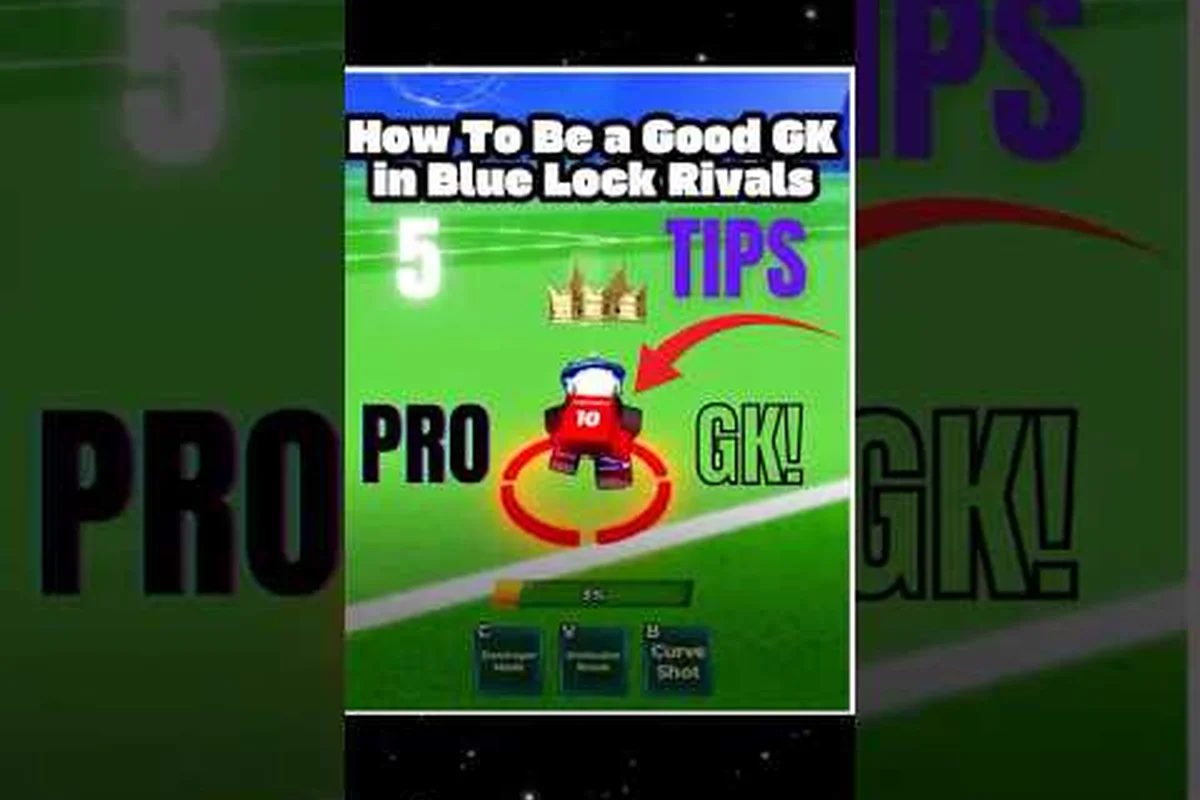
Community video resources such as Floaty 2’s five tips for Blue Lock: Rivals can offer broader community-tested ideas, but treat individual sound recommendations as player opinion rather than an official setting. The verified community group also notes that the experience is a fan tribute and is not endorsed by the IP owners, so expectations should remain tied to the current in-game interface.
Platform-Specific Setup and Control Habits
There is no verified public list assigning permanent key letters to every goalkeeper action on each platform. Instead of publishing invented keybinds, check the game’s current control overlay while your character is selected as goalkeeper. Compare the displayed functions with the categories below, then save the layout in a way that keeps the primary response accessible.
Keyboard-and-mouse players may place the most frequent shot reaction under a comfortable finger position, while controller players may prefer movement on the left stick and reaction actions on face buttons. Those are general input conventions, not documented Blue Lock: Rivals bindings. The final layout should reflect the platform actually in use.
| Setup element | Lower-priority player | Higher-priority player | Reason |
|---|---|---|---|
| Primary shot reaction | Keep the current layout if it feels natural | Move it to the fastest comfortable action | Saves happen in short windows |
| Focus or switch control | Place it away from frequent actions | Keep it reachable without leaving movement | Helps maintain field awareness |
| Passing action | Use the standard menu position | Adjust for rapid distribution | Quick release reduces counter pressure |
| Audio settings | Lower nonessential alerts | Raise the confirmed save cue moderately | Makes key events easier to recognize |
| Camera and interface | Reduce unnecessary visual clutter | Keep the goal and ball readable | Supports body-position reading |
Before entering a competitive match, verify the current layout through the game’s own interface. Updates may alter the controls, and the official Roblox page confirms that Style selection affects available abilities. Treat any guide showing a fixed keyboard or controller arrangement as potentially outdated unless it has been checked against the current version.
Build a pre-match checklist
Complete the same short routine each time. Confirm that movement feels responsive, verify the shot-reaction action, test the passing action, and trigger the save cue once. Then make sure the camera provides enough visibility to watch the striker’s hips and the space behind the ball.
Consistency reduces accidental inputs because the same action is always located in the same functional place. That matters more than a theoretically “optimal” setup because a complicated layout encourages hesitation during fast sequences. The Blue Lock: Rivals goalkeeper build and tips overview can help organize this broader preparation around a repeatable practice routine.
Match Scenarios and Recovery Decisions
Goalkeeper control becomes easier to evaluate when each match situation has a clear purpose. Against a lone striker, extra space around the goal may justify stepping forward to reduce the shooting angle. Against multiple attackers, retreating and scanning can prevent an easy pass from becoming a free chance. The correct choice depends on space, pressure, and the goalkeeper’s Style.
Recovery speed separates an ordinary stop from a dangerous second ball. After a save or clearance, turn toward the loose ball and use the available movement functions to reach the next playable location. Do not sprint blindly into a cluster of players, since that can leave the goal exposed and turn a successful save into a concession.
| Match scenario | Primary objective | Control response | Risk to avoid |
|---|---|---|---|
| One attacker with the ball | Narrow the shooting angle | Adjust position and watch the body shape | Leaving the goal before the ball is released |
| Two attackers near the box | Delay the attack and track runners | Keep the goal protected and scan the second option | Chasing one player while ignoring a rebound |
| Quick one-on-two | Challenge the ball carrier | Meet the danger while preserving an escape route | Rushing beyond the defense |
| Counter through the center | Recover toward the goal | Turn and track the runner | Sprinting away from the scoring direction |
| Ball beside the goal line | Protect the near-post area | Stay goal-side and react to the cross | Leaving the near post unmarked |
| Long clearance near the box | Prepare for a second ball | Move through space and watch the landing | Assuming the first clearance ends the threat |
These decisions also show why Blue Lock: Rivals GK technique is more than rapid button pressing. Positioning determines which shot you must react to, while distribution determines whether the keeper’s successful stop creates a meaningful attack. A complete performance includes both sides of the ball.
Practice realistic decision chains
Train three chains rather than isolated actions. The first is shot, save, and rebound. The second is catch, scan, and pass. The third is pressure, clear, and recovery. Each chain teaches the transition that separate drills often omit, and each exposes whether your focus is trapped on the ball or moving with the wider play.
Use community sessions to test unfamiliar situations, but evaluate the results against the current game rather than copying a fixed sequence. The game page recorded 18,462 concurrent players when checked on November 1, 2026, indicating a large and active community, but popularity does not guarantee that every published technique matches the current build. Verify behavior yourself before treating it as fixed.
A Practical Goalkeeper Control Routine
A useful routine should combine deliberate positioning, decisive reaction, fast distribution, and one clear audio signal. Begin every defensive possession from a balanced starting point, read the body shape, and wait for the attacker to commit. After the save, locate the next threat before looking for a pass.
Use the following sequence as a repeatable practice routine. It does not require undocumented abilities or fixed keybinds, so it remains adaptable across devices and updates.
-
Set the angle by keeping the goal protected and your body balanced.
-
Read the striker by watching the hips and shoulders instead of the ball alone.
-
Wait for commitment before making a large movement toward the shot.
-
React decisively toward the likely path while preserving balance for a rebound.
-
Secure or redirect the ball according to available pressure and space.
-
Scan before distributing and choose a simple, available teammate.
-
Release quickly because possession becomes more valuable during a counterattack.
-
Recover immediately after any clearance by turning toward the next ball.
-
Use the save cue selectively so the sound confirms an event instead of adding noise.
| Practice block | Duration | Main objective | Success signal |
|---|---|---|---|
| Positioning | 5 minutes | Stay balanced and protect the angle | Fewer early, unnecessary dives |
| Save reactions | 10 minutes | Respond after reading the body | Cleaner movement and better rebound control |
| Distribution | 10 minutes | Find a safe receiver under pressure | Faster release without an obvious interception |
| Audio checks | 5 minutes | Verify the current save cue | Correct event produces a distinct signal |
| Match review | 5 minutes | Identify one positioning and one distribution habit | Clear improvement goal for the next match |
This routine delivers more value than repeatedly pressing actions without a scenario because every input has a purpose. It also makes mistakes easier to diagnose: a conceded goal may indicate a positioning error, a late reaction, a poor outlet, or a failed recovery rather than a simple control problem.
Frequently Asked Questions
What should a goalkeeper prioritize in Blue Lock: Rivals?
Positioning, reaction timing, and quick distribution should be the foundation. Starting on the line preserves the direct route to the ball, reading the striker’s hips reduces guessing, and releasing possession quickly limits the opposition’s recovery time. Accurate controls help, but a clear decision is more valuable than pressing an action without knowing the correct moment.
Can Blue Lock: Rivals goalkeeper controls be assigned manually?
The exact customization options are not documented on the verified public pages and may vary by platform or version. Check the current in-game interface for available bindings, camera options, and audio settings. Avoid relying on old fixed keybinds because updates can change the layout, and test every critical action before entering a match.
What is the best way to improve Blue Lock: Rivals GK passing?
Practice selecting a receiver before securing the ball, then look for open space rather than the most advanced teammate. Choose a short pass when a close teammate has a clear lane, a direct pass when a runner is breaking free, and a clearance when no outlet is safe. Quick distribution matters in five-a-side play because pressure can arrive almost immediately.
Does a custom save sound make goalkeeping easier?
A clear save sound can help you notice confirmed saves when visual effects make the ball harder to track. It cannot replace watching the striker’s body and tracking rebounds. Test the current cue in a quiet area, assign one meaning to each sound, and keep the volume useful without obscuring other match information.
How should a goalkeeper react after conceding possession?
Turn toward the danger, locate the next attacker or loose ball, and recover through the shortest practical route. Avoid sprinting directly into a group of opponents, because that can leave the goal unprotected. Reset your balance, re-establish the angle, and make the next decision from a stable position rather than repeating the original mistake.