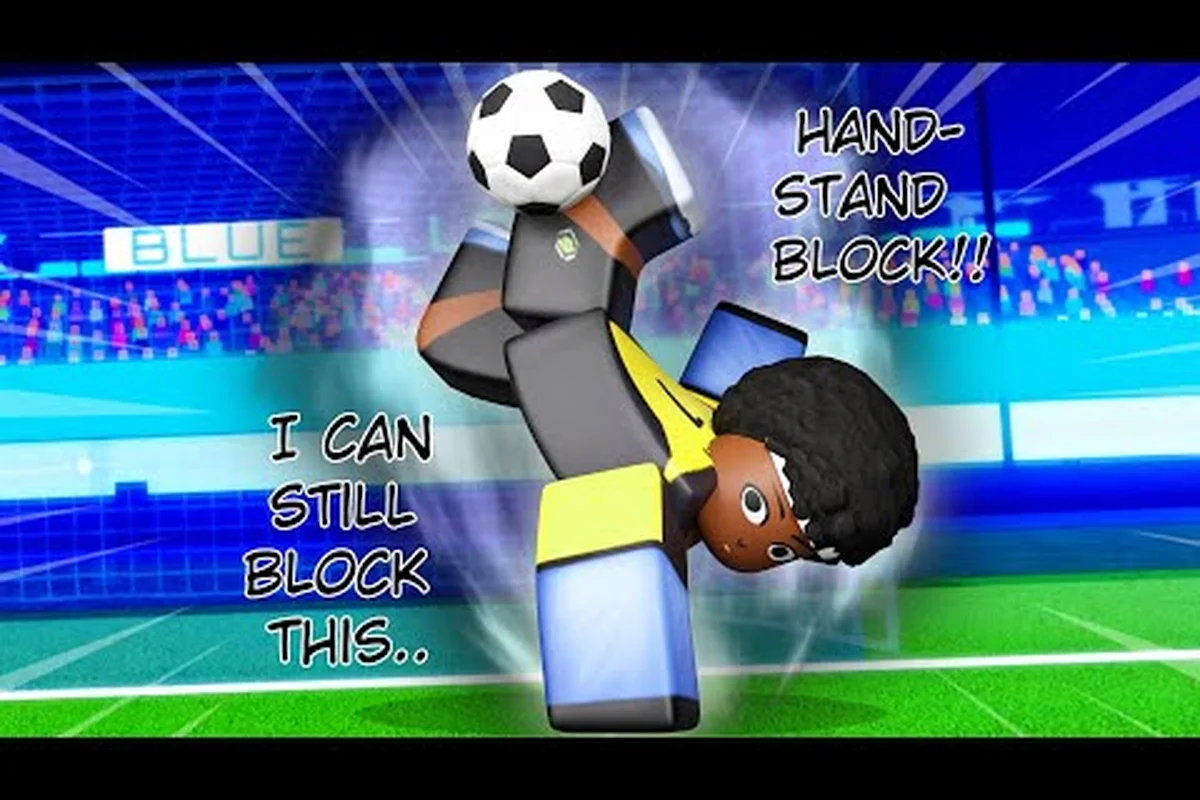
Blue Lock: Rivals goalkeeper tips for 2026 matter because disciplined habits can turn repeated saves into a launch point for counterattacks. Match your Style to the matchup, stay compact so you can read the ball early, and use goalkeeper Flow to bridge clean catches with quick distribution; when Awakening activates at the right moment, a broken press can become a decisive goal-scoring chance rather than a routine reset.
Blue Lock: Rivals is a fan-made five-a-side Roblox football experience, and its compact pitch makes goalkeeper decisions unusually important. The official Blue Lock: Rivals game page (checked November 2026) lists a server size of 10 players, so every save can affect the next counterattack. This guide develops a practical blue lock rivals goalkeeper build around style selection, positioning, flow, awakening timing, distribution, and competitive habits without inventing undocumented ability details.
GK Build Overview
A strong build begins with the role you select before queueing. Because a Style determines which abilities are available during the match, your choice also defines the tools available to you as a player-controlled goalkeeper. This blue lock rivals goalkeeper build prioritizes dependable positioning and rapid distribution over cosmetic extras or speculative ability claims.
The most useful first step is to understand how your team operates. Blue Lock: Rivals is played five against five, which leaves fewer outfield players than standard football. That means open space can appear quickly after a turnover, and a goalkeeper who holds the ball for too long may allow the opposition to reorganize. Your central objective is to protect the goal, then release possession before the defense can recover.
Build priorities at a glance
| Priority | What to improve | Why it matters in five-a-side football |
|---|---|---|
| Style fit | Select a goalkeeper-oriented Style before queueing | Your Style controls the abilities available in the match |
| First movement | Start on the line, then react to the attacker | Early commitment can leave the opposite side exposed |
| Shot reading | Watch the striker’s body and the ball’s path | Clean reactions depend on useful visual information |
| Distribution | Release possession promptly after securing it | A slow release reduces the value of the save |
| Awareness | Scan for the next receiver and passing lane | Open space appears quickly on a small pitch |
Core goalkeeper build
For a baseline, use a Private Server or a casual match to learn the core goalkeeper loop before testing it in competitive play; lower-pressure practice matches let you rehearse positioning, shot-reading, and distribution without immediate consequences. Then carry the same routine into competitive matches, where faster attacks and stronger strikers make delayed reactions costly. Treat this as your repeatable template: secure possession, create a simple outlet, recover for the next ball, and begin the counterattack immediately.
-
Initial position: Stay near your goal line while the ball is under team control.
-
Pressure response: Step toward the shooter after the attacker visibly commits to the shot.
-
Save selection: Secure the ball when the situation is safe; redirect it away when a teammate cannot realistically clear pressure.
-
Recovery motion: Keep moving after every save because an immediate rebound or second ball may arrive.
-
Release rhythm: Look for a simple pass immediately after gaining possession.
-
Mindset: Treat every distribution as the first action of a counterattack.
This is more reliable than memorizing a flashy route for one Style. The general goalkeeper guide can help with the fundamentals, while this build concentrates on combining them into a repeatable match routine.
Picking a Keeper Kit for Your Team
Your Style is the foundation of the blue lock rivals goalkeeper build. The game’s page confirms that players choose a Style before queueing, and that choice determines which abilities are available. Community references identify Gagamaru as the goalkeeper reference and Aiku as a defensive Style from the NEL wave, but exact cooldown, damage, and activation details are not documented in the available material.
That distinction is important. Community videos and player reports can explain practical preferences, but they should not be treated as a balance patch or a formal stat sheet. If the game changes an ability, verify its current behavior in the match itself rather than relying on an old guide.
Style comparison
| Style | Verified role reference | Best build purpose | What to verify in game |
|---|---|---|---|
| Gagamaru | Goalkeeper reference | Build a dedicated shot-stopping and distribution routine | Current abilities, timing, and range |
| Aiku | Defensive Style from the NEL wave | Add an alternative option when your team needs more defensive coverage | Whether the current kit suits your preferred goalkeeper role |
| Other roster Styles | Exact roles are not documented here | Compare by feel, available tools, and team need | Do not assume goalkeeper functions without checking |
The practical choice depends on your confidence and the match rules in front of you. If you are still learning where to stand, choose the Style whose tools feel most controllable and review the goalkeeper Style comparison before committing. The right answer can change when teammates begin making more advanced passes.
When to switch Styles
Switching Styles is not automatically an upgrade. Consider a change when your current option provides little value for the role you actually occupy in the match. For example, if you mostly stay back, test whether the goalkeeper reference gives you a more useful save-and-release pattern. If you regularly step into challenges, compare that with a defensive-oriented option.
Community coverage from the verified Blue Lock: Rivals playstyle test video shows that players actively compare the roster, although its specific judgments remain community opinion. Treat those impressions as a starting point for personal testing, not an authoritative tier list.
Goalkeeper Flow and Positioning
The blue lock rivals goalkeeper flow is about controlling the sequence of decisions: hold the line, read the attack, commit after the shooter reveals intent, save, recover, and distribute. Because the pitch contains only ten players, unnecessary movement by a goalkeeper can create a passing lane that would not be so obvious in a larger formation.
Start each phase with a clear reference point. When your team has possession, remain connected to the goal and the nearest central defender. When the opposition controls the ball, find the active attacker and orient your body toward the center of the pitch. These simple adjustments make your positioning easier to judge under pressure.
Position by phase
| Match phase | Recommended position | Movement rule | Common mistake |
|---|---|---|---|
| Team possession | Near the goal line | Keep the goal protected while staying available for a back pass | Rushing far forward and leaving the defense exposed |
| Opponent buildup | Slightly off the line | Re-enter the line when a pass develops centrally | Leaving early because an attacker receives the ball |
| Attacker approaching | Between the ball and goal center | Narrow the visible angle without crossing the attacker | Chasing the ball around the attacker |
| Shot committed | Move toward the shot path | React after the body and ball indicate the attempt | Diving before the shot is genuinely committed |
| After a save | Stay active | Locate the rebound or outlet immediately | Standing still after securing possession |
Community coaching commonly emphasizes starting on the line, stepping out after the shooter commits, reading the striker’s hips, and diving later. Those principles support a disciplined line-first response, which is more adaptable than predicting an exact shot direction before it develops.
Build a repeatable flow
In Blue Lock: Rivals, a reliable goalkeeper build depends on a repeatable decision flow, not panic diving. Use each match to test your positioning against different shot angles, then adjust your stance so you can track the ball while covering the most dangerous scoring lane. For example, if an attacker consistently drags the ball across their body before shooting, stay square until the plant foot and hip rotation reveal the final direction; this reduces the chance of reacting to a feint. Treat every duel as a small scouting exercise, recording which cues reliably predicted shots and where your positioning failed.
-
Scan: Locate the ball, the closest attacker, and the open side of the goal.
-
Set: Position your body so both the ball and goal center remain visible.
-
Read: Watch the attacker’s plant foot, hip rotation, and approach angle.
-
Commit: Move decisively once the ball and body indicate the shot.
The flow matters more than speed. If you move early and guess wrong, a simple pass to the far side may expose the entire goal. If you wait too long after the shooter commits, the shot can travel beyond your reach. The shot-saving guide offers additional practice ideas for anticipation and dive timing.
Goalkeeper Awakening Strategy
The blue lock rivals goalkeeper awakening should be treated as a situational tool within a larger save routine, not as a button to activate whenever possession reaches the goalkeeper. The available verified material does not document the awakening’s exact activation cost, duration, cooldown, or numerical effect, so those details must be checked in game.
That uncertainty changes how you should learn it. Test the awakening in controlled situations first, then observe whether it changes your movement, save options, or available response. If the result differs after a patch, your previous timing no longer guarantees the same reaction.
Awakening decision checklist
Before using it, answer these questions: in Blue Lock: Rivals, goalkeeper Awakening should be timed around the shot’s development rather than activated automatically. For example, if a direct shot is already closing, test whether the Awakened save improves your reaction window; if the danger is still forming near the edge of the penalty area, hold the ability for a later one-on-one or rebound. The key is preserving flow: premature activation can leave you without a reliable save or outlet, while waiting through a clear chance may expose your goalkeeper build to a second attacker.
-
Is the opponent already taking a clear shot, or is the danger still developing?
-
Can a normal save and quick recovery cover the situation?
-
Is the goalkeeper exposed to a rebound or a second attacker?
-
Would using the tool now prevent a goal without wasting a future chance?
-
Have recent matches changed its timing or effect?
| Situation | Awakened response | Conservative alternative |
|---|---|---|
| Clear direct shot | Test whether the tool improves your immediate save timing | Dive normally if your read is already clear |
| Teammate under pressure | Hold position and prepare for an outlet | Keep the ability available |
| Scramble near the goal | Use it only if it improves your chance of securing the ball | Recover normally and watch the rebound |
| Late defensive action | Commit because the goal is immediately threatened | Stay on the line while the ball remains distant |
| Unknown current behavior | Test in a lower-risk moment | Do not waste it in a one-on-one attempt |
Measure the result, not the animation
A successful awakening use should produce a practical advantage: a saved shot, controlled ball, better body position, or enough time to release possession. If it merely looks impressive but leaves the goal exposed, the decision was poor. Focus on the end state because animations and interface effects can be misleading without documented timing data.
Practice routine
Use short, deliberate repetitions rather than activating the tool whenever it becomes available. First, enter a normal shot with no awakening input and record your result. Next, attempt the same angle with the awakening at the moment the shot is clearly committed. Compare whether you save earlier, cover more ground, or recover more effectively. This gives you personal evidence without presenting community assumptions as fixed mechanics.
GK Competitive Match Priorities
Competitive goalkeeping is about reducing high-value errors. In five-a-side football, a single failed save can turn into a two-on-one or a direct scoring chance because fewer defenders remain between the attacker and the goal. A reliable goalkeeper approach therefore prioritizes repeatable positioning, decisive reads, and immediate outlets.
The official page records more than 5 billion visits for the experience as of November 1, 2026, along with a large concurrent player community. That scale does not prove individual win rates or balance, but it does suggest that a small improvement in save consistency can be meaningful across many matches. Stay focused on controllable behavior rather than assuming a particular Style has a hidden competitive advantage.
Competitive decision priorities
| Priority | Error to prevent | Corrective action |
|---|---|---|
| One | Guessing before commitment | Stay set until the attacker’s body and ball reveal intent |
| Two | Chasing around the attacker | Keep the goal center protected and react toward the shot |
| Three | Holding the ball too long | Identify an outlet immediately after securing possession |
| Four | Forgetting the rebound | Continue moving through the full save sequence |
| Five | Saving outside useful range | Re-establish a safe position before committing again |
What to measure between matches
Track a small set of outcomes after every match. Record whether you started on the line, whether you committed before or after the shooter, how many dangerous second balls reached your area, and whether you released possession quickly. Avoid judging the entire match by one save because a goalkeeper can play well and still lose when teammates do not convert their chances.
A useful weekly review might compare your flow rating, awakening value, and match result from each match. For example, if your flow stayed high but your awakening was used poorly, identify the exact moment it changed your positioning or decision-making; if a clean save came from staying on your line, note that as a repeatable success rather than an isolated highlight. Reviewing these patterns separates controllable goalkeeper decisions from teammate finishing and makes your next performance more actionable.
-
Posession discipline: Did I leave the line during ordinary buildup?
-
Read quality: Did I react to a real shot cue or merely the attacker’s approach?
-
Recovery: Was I ready for a rebound immediately after the save?
-
Distribution: Did I delay a simple outlet while waiting for a perfect pass?
-
Awakening value: Did its use improve the result, or did it consume an opportunity without changing the outcome?
For a deeper look at mistakes that lead to conceded goals, compare your notes with the 1v1 defending guide. That companion guide is especially useful when your positioning feels correct on paper but breaks down under direct pressure.
Goalkeeper Distribution and Cosmetics
The strongest save is only the first half of the goalkeeper build. After securing the ball, you must turn defense into attack before the opposition can reset. This part of the blue lock rivals goalkeeper flow is especially important in five-a-side play because open grass can appear behind a recovering defense almost immediately.
Do not wait for every teammate to stop moving. Identify the most sensible available receiver, select the simplest pass, and release before pressure arrives. If no clean option exists, move the ball away from danger rather than forcing a pass into a crowded lane. The goalkeeper controls and distribution guide can help you refine the practical routine without relying on undocumented button names.
Distribution decision table
| After the save | Best decision | Why |
|---|---|---|
| A teammate has clear forward space | Pass into that space | It converts the save into a counterattack |
| The nearest option is under immediate pressure | Use a safe release away from danger | A poor forward pass can cause another shot |
| Several attackers are closing down | Move quickly and decisively | Hesitation gives the defense time to recover |
| You have no clear teammate target | Prioritize safety over ambition | Preventing a second goal matters more than a highlight pass |
| A rebound remains active | Continue the save sequence first | The first save has not produced possession yet |
Cosmetics versus competitive value
Cosmetics can make your goalkeeper profile look distinct, but they should remain separate from competitive analysis. The verified game information does not establish that a particular outfit, accessory, or visual effect improves save range, reaction time, awakening timing, or competitive performance. Unless the game clearly displays a mechanical benefit, treat cosmetics as appearance choices only.
| Build layer | What it changes | Competitive priority |
|---|---|---|
| Style | Determines available abilities | Very high |
| Positioning habits | Controls the space attackers can use | Very high |
| Save decisions | Affects whether shots become rebounds or possession | Very high |
| Awakening timing | May influence how and when the tool is used | High, but verify current behavior |
| Distribution habits | Converts saves into attacks | High |
| Cosmetics | Changes appearance | Low unless an explicit mechanical effect is shown |
For example, a “maximum-range” goalkeeper claim is not actionable if the current Blue Lock: Rivals interface does not show that stat on the goalkeeper’s profile. Test the same shot sequence with Style, positioning, and Awakening active, then compare the resulting catch, parry, rebound, and distribution options; only attributes or effects visibly confirmed by the client should enter the competitive build.
Be a Goalkeeper Practice Plan
Knowing the theory is less useful than producing the right movement under pressure. To progress as a Blue Lock: Rivals goalkeeper, build a drill plan around observation, decision speed, and transition into distribution. Each exercise should have one measurable purpose so you can tell whether practice improved your match behavior.
The game’s official community group describes the experience as an unofficial fan tribute, and its listed page should be treated as the authority for the game’s basic format rather than for unpublished ability statistics. See the Blue Lock Rivals Unofficial Fans community page for that project information.
Weekly practice plan
| Session | Duration | Exercise | Success check |
|---|---|---|---|
| Line discipline | 10 minutes | Hold a starting position while opponents circulate possession | Leave the line only after a committed threat |
| Body reading | 10 minutes | Track an attacker’s approach without committing | React only when the ball and body reveal direction |
| Save-to-outlet | 10 minutes | Secure the ball and release it promptly | Complete the pass before pressure closes the space |
| Awakening test | 10 minutes | Compare normal and awakened responses | Record any measurable timing or recovery difference |
| Match review | 10 minutes | Review one recent match | Identify one repeatable adjustment |
Turn feedback into one rule
After each session, write one rule for your next match. Examples include “do not leave the line before the pass develops,” “look for the outlet immediately after securing the ball,” or “use the awakening only when the shot is clearly committed.” One rule is easier to apply than a long checklist, and it makes the next session measurable.
Community observation, not copied routines
Player experience is valuable for identifying common tendencies, especially around anticipation and shot selection. However, a community report should remain a hypothesis until your own matches confirm it. Exact ranges, cooldowns, damage numbers, and input procedures are not documented in the verified source material, so avoid turning guesses into fixed rules.
You can also watch a general introductory community video such as Floaty 2’s five tips for Blue Lock: Rivals. Treat its advice as a prompt for practice rather than proof that a route works for every account, play style, or current update.
GK Tips 2026: Summary
The best blue lock rivals gk build 2026 is not defined by one ability or cosmetic. It is a complete routine: select an appropriate Style, remain disciplined on the line, read the attacker, commit after the shot develops, recover for the rebound, and distribute quickly. That sequence fits the compact five-a-side format because it protects the goal without surrendering space elsewhere.
Treat the awakening as a measured decision, verify undocumented details in the current game, and review actual match evidence instead of relying on invented numbers. When you want a deeper view of the alternatives, the best goalkeeper Style breakdown can help compare options before you queue. The core priority remains simple: make the next correct action in the smallest possible space, then turn every controlled save into a new attacking opportunity.
Frequently Asked Questions
What is the best goalkeeper build in Blue Lock: Rivals?
The strongest build combines a suitable Style, disciplined line positioning, late shot commitment, immediate rebound recovery, and quick distribution. Gagamaru is the verified goalkeeper reference, while Aiku represents a defensive option. Exact abilities and balance can change, so confirm current behavior in game rather than relying on an unverified stat ranking.
When should a goalkeeper use the awakening in Blue Lock: Rivals?
Use the awakening when the shot is clearly committed and a normal reaction may not provide enough coverage or recovery time. Avoid spending it when the danger is distant, the ball is already secure, or your basic positioning already solves the situation. Its exact duration, cooldown, and effect are not documented in the available material.
How do Blue Lock: Rivals goalkeepers improve positioning?
Start near the goal line during team possession, re-enter your line as the opponent builds through the center, and keep the goal center protected when an attacker approaches. Move toward the ball only after the attacker reveals shooting intent. Track the striker’s body rather than guessing from the foot planted far from the ball.
Should a goalkeeper catch or punch the ball in Blue Lock: Rivals?
Choose whichever response best controls the immediate danger. Secure possession when the surrounding space is safe and a quick outlet exists; redirect the ball when pressure is close or a teammate cannot clear it. Because exact save rules are not documented here, test both options and learn which situations produce safer recovery.
What is the best way to improve in competitive goalkeeper play?
Review one specific behavior after each match rather than relying on the result alone. Track early line departures, guessed shots, slow distributions, and rebound errors. Turn the most common issue into one rule for the next session, then repeat in practice before returning to competitive matches.