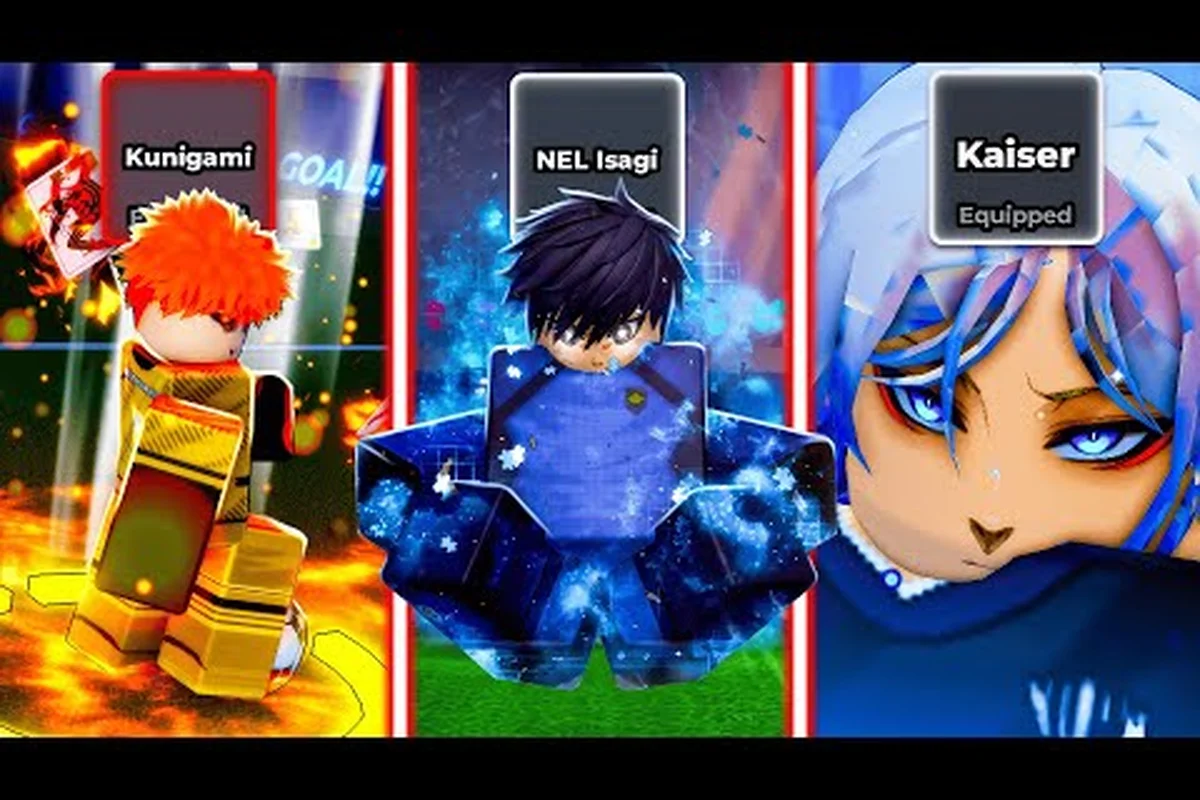
Blue Lock: Rivals styles determine which abilities you can use in each 5v5 match, so choosing the right one matters before the game begins. This Blue Lock: Rivals styles list compares every verified style by role, standout trait, and ideal playstyle.
Styles List Overview
Players choose a character style before entering a match, and that choice determines the abilities available on the field. The official game page for Blue Lock: Rivals as of November 2026 identifies the experience as an unofficial, fan-made 5v5 Roblox game with a server size of 10.
That distinction matters because the game is not endorsed by Kodansha or the anime’s rights holders, and its roster can change through updates. The following Blue Lock: Rivals all styles overview therefore separates broad roles from exact ability details rather than inventing numbers that are not documented.
| Style | Primary role | Standout trait | Best match for players who… |
|---|---|---|---|
| Isagi | Spatial attacker | Reads the field and attacks space | Prefer smart movement and combinations |
| Bachira | Dribbler | Unpredictable close control | Want to attack one-on-one |
| Chigiri | Speed attacker | Reaches loose balls and breaks lines | Prefer rapid transitions |
| Nagi | Technical finisher | First-touch control and aerial finishes | Want a patient scorer |
| Barou | Power striker | Direct, forceful shooting | Prefer aggressive finishes |
| Rin | Complete attacker | Broad attacking skill set | Want versatile forward play |
| Sae | Creative passer | Passing and field vision | Prefer build-up and chance creation |
| Shidou | Explosive finisher | Powerful attacking bursts | Want chaos in the box |
| Kaiser | Impact finisher | Ranged finishing ability | Prefer power with distance |
| Loki | Pace attacker | Speed-heavy approach | Want to exploit open space |
| Lavinho | Technical attacker | Feints and flair | Enjoy creative one-on-one play |
| Snuffy | Support attacker | Awakening-driven support play | Prefer teamwork-oriented football |
| Zantetsu | Speed and finishing attacker | Added during the 2026 cycle | Want a direct new option |
| Yukimiya | Dribbling specialist | Close-control emphasis | Prefer skill-based attacking |
| Aiku | Defender | Reads attacking threats | Want a defensive anchor |
| Gagamaru | Goalkeeper | Reference goalkeeper style | Prefer shot-stopping and support |
This table functions as a Blue Lock: Rivals style showcase organized around practical team needs, not a permanent tier ranking. Individual ability names, exact cooldowns, damage figures, and drop rates are not documented consistently, so players should verify those details inside the current game version.
Verified roster versus changing content
The roster observed through the game page and community coverage includes 16 styles. Zantetsu was added on October 31, 2026, while Yukimiya and Sae received reworks during the 2026 cycle. Those changes make dated labels useful: a style that feels strong today may be adjusted after a balance patch.
The game also distinguishes normal pulls from rarity bands commonly described by the community, including Limited Styles attached to seasonal events. However, no official drop-rate table or definitive rarity ladder has been published. For a closer look at collection categories, the Blue Lock: Rivals style rarity breakdown explains why ownership and ability strength should be treated as separate questions.
Attacking Styles by Role
Most players spend their time on the attacking side of the pitch, but the best style is the one whose strengths fit the match rather than the character with the loudest reputation. The attacking group ranges from pure dribblers to power finishers, technical creators, and fast forwards.
Central attackers
| Style | Core function | How the role works | Main risk |
|---|---|---|---|
| Isagi | Spatial striker | Moves into space and targets developing attacks | May depend on teammates creating opportunities |
| Rin | Versatile forward | Supports several attacking approaches | Broad strengths may require better decision-making |
| Kaiser | Impact scorer | Looks for forceful finishes, including from range | Overcommitting can leave space behind |
| Nagi | Technical scorer | Uses control, trapping, and aerial finishing | Patience may suit slow-tempo exchanges |
| Barou | Power forward | Attacks space with direct shooting | Less ideal when the game requires patient circulation |
| Shidou | Explosive attacker | Creates sudden danger near goal | Aggression can disrupt team shape |
Isagi is particularly valuable in coordinated matches because his defining trait concerns reading space rather than isolated speed. The Isagi and early attacker style analysis explains how this role can fit players who prefer movement, passing combinations, and arriving at the right moment rather than forcing a dribble every time.
Nagi offers a different attacking identity. His style emphasizes first-touch control, trapping, and aerial finishes, making him a natural fit for players who enjoy receiving a pass in a threatening area and turning the moment into a shot. Barou and Kaiser lean toward more forceful endings, while Shidou is associated with explosive attacking energy.
Wide and pace-based attackers
| Style | Main strength | Supporting strength | Ideal teammate setup |
|---|---|---|---|
| Chigiri | Speed toward loose balls | Breaking defensive lines | A passer who can release him into space |
| Loki | High pace | Attacking runs | A stable central outlet to collect passes |
| Zantetsu | Direct finishing | Speed-based attacks | Support for rapid transitions |
| Yukimiya | Dribbling | Close-control creativity | A side that rewards one-on-one attempts |
Chigiri and Loki are pace-first options, but speed alone does not guarantee the ball will arrive. A teammate must recognize when the winger is free, while the winger must avoid making runs that leave the team without an outlet. The Loki, Lavinho, and other 2026 style profiles give a closer look at how pace, flair, dribbling, and support approaches differ.
Zantetsu is the clearest entry in the recently added category. The verified roster lists Zantetsu as a new style with speed and finishing, but exact ability numbers are not documented. Rather than label it automatically superior, treat the style as a current option to test alongside established attackers, especially in fast matches where direct forward play produces frequent transitions.
Technical and creative attackers
Bachira, Rin, Sae, Lavinho, and Yukimiya operate differently within the same broad attacking category. Bachira emphasizes unpredictable dribbling and close control. Rin is the all-round attacking benchmark, while Sae contributes passing and vision. Lavinho brings feints and technical flair, and Yukimiya is identified as a dribbling specialist.
| Attacking approach | Strongest style choices | What to practice |
|---|---|---|
| One-on-one dribbling | Bachira, Lavinho, Yukimiya | Change direction without surrendering possession |
| Combination play | Isagi, Sae, Rin | Scan before receiving and identify the next runner |
| Finishing threats | Nagi, Barou, Kaiser, Shidou | Choose the final action early |
| Transition football | Chigiri, Loki, Zantetsu | Release into space and arrive with purpose |
| Team-oriented support | Snuffy | Track the second ball and offer passing options |
This arrangement gives the Blue Lock: Rivals styles list more depth than a simple star ranking. A player can still be effective without possessing the rarest pull, because positioning, communication, and the selected role often matter more than a character’s collection status.
Defensive and Goalkeeping Style Options
Not every player wants to score. Defensive styles can stabilize a team by reducing space, contesting dangerous attacks, and giving teammates more freedom to move forward. The verified roster includes Aiku as a defensive reader and Gagamaru as the reference goalkeeper style.
| Style | Team responsibility | Main attribute | When it becomes useful |
|---|---|---|---|
| Aiku | Protect the defensive unit | Reading attackers and threats | When opponents build chances through movement |
| Gagamaru | Guard the goal | Goalkeeping and shot response | Whenever the opposition creates a direct finish |
Aiku is the primary option for players who enjoy anticipation. His role centers on reading attacks rather than relying only on raw pace. That makes him valuable against opponents who use coordinated movement, because a defender who understands the timing of a runner can reduce the space that forward styles need.
Gagamaru serves a different function because goalkeepers have different objectives from outfield defenders. The best goalkeeper is not simply the fastest player near the ball; positioning, reaction, and the ability to cover a shot can matter more. Exact reach, reaction timing, and ability names should be verified in game because those details are not documented in the available official page.
Choosing defense without abandoning attack
A defensive choice does not mean ignoring every attacking opportunity. It means contributing to a clearer team structure. A defender can still make safe forward runs, press when appropriate, or occupy a passing lane when the ball is elsewhere. The key is to choose actions that match the role instead of copying an attacking build with a defensive label.
| Match situation | Style choice | Practical objective |
|---|---|---|
| Opponents rely on quick combinations | Aiku | Read the receiver and protect the lane |
| Opponents take frequent shots | Gagamaru | Stay set, track the ball, and protect the goal |
| Your team needs more outlets | A faster attacking style | Stretch the field and support transitions |
| Your team lacks positional balance | Aiku or Gagamaru | Provide a clearly defined defensive responsibility |
Do not treat the goalkeeper as a substitute for a complete defensive lineup. A keeper can cover mistakes, but the team still needs field players to protect the spaces that create easy chances. Keeping that distinction clear makes the Blue Lock: Rivals styles comparison more useful for balanced squads.
Style Abilities and Practical Strengths
The available public information supports high-level descriptions of each style’s identity, but not exact numerical ability data. Damage, cooldown length, stamina cost, and precise activation conditions are not documented on the official game page, so this guide avoids turning uncertain values into firm facts.
| Ability category | Styles associated with it | What players can reasonably expect |
|---|---|---|
| Spatial awareness | Isagi, Aiku | Better recognition of movement and available space |
| Dribbling and control | Bachira, Yukimiya, Lavinho | More options when facing defenders closely |
| Passing and vision | Sae | Better support for teammates and forward build-up |
| Aerial finishing | Nagi | Stronger relevance in high balls and penalty-area finishes |
| Power shooting | Barou, Kaiser | Greater emphasis on forceful finishes |
| Speed and recovery | Chigiri, Loki, Zantetsu | More opportunities in transitions and races |
| Awakening-driven support | Snuffy | Greater emphasis on team support and involvement |
Community gameplay coverage, including KTG Gaming’s style-testing video, demonstrates that players regularly compare the roster in practice. Such videos are useful for seeing a creator’s impressions, but individual placement or balance conclusions should be treated as dated community opinion rather than official ranking data.
Reading a style without invented numbers
When evaluating the Blue Lock: Rivals style abilities, watch what happens rather than relying on a spreadsheet that may be outdated. Start with the basic action that activates most often, then note whether the effect changes movement, control, finishing, passing, or defensive positioning. Because input names are not verified here, use the action’s function rather than assigning an undocumented button label.
A practical test includes four checkpoints. First, note whether the style helps before possession arrives. Second, identify whether it creates a new option after receiving the ball. Third, observe whether its main strength fits the current score and match tempo. Fourth, compare the team’s output with and without that style in similar matches.
This method also reduces the influence of rarity. A rare Style may have a more dramatic presentation, but collection value does not prove stronger team contribution. Players examining premium pulls can also consult the Master Class and World Class style overview, but should keep ability testing and practical fit ahead of rarity alone.
Situational strengths versus permanent rankings
A style may be excellent in one setting and awkward in another. A passer can dominate a match built around patient buildup, yet lose value if teammates continually attack without support. A finisher can exploit repeated chances, yet feel less effective when possession rarely reaches the final third. A fast attacker may create the best counterattack of the game but leave the side exposed during longer stretches of possession.
| Match condition | Likely advantage | Selection principle |
|---|---|---|
| Few chances, many possessions | Sae, Isagi, Rin | Prioritize buildup and decision-making |
| Repeated shots from strong positions | Nagi, Barou, Kaiser, Shidou | Prioritize finishing tools |
| Fast transitions | Chigiri, Loki, Zantetsu | Prioritize pace and direct movement |
| One defender in a foot race | Bachira, Lavinho, Yukimiya | Prioritize close control and feints |
| Defensive pressure on the opponent | Aiku | Prioritize anticipation and structure |
This is why a complete Blue Lock: Rivals styles list should separate role, strength, and situational usefulness. There is no official universal tier list in the cited materials, and a permanent ranking would imply a level of precision that the documentation does not support.
Selecting the Best Style for Your Match
A good selection begins with the job your team needs, not with the character you want to use. Decide whether you will create chances, finish them, support transitions, protect space, or keep goal. Only then should you compare the styles that fulfill that job.
A five-step selection process
-
Choose your responsibility. Select a creator if you want to influence buildup, a finisher if you want the final touch, a winger for wide attacks, or a defensive role for stability.
-
Check team balance. Avoid choosing the same narrow role repeatedly unless the team has another way to progress the ball.
-
Match the score situation. Direct speed may help when chasing a goal, while controlled buildup can be safer when protecting a lead.
-
Test the core action. Verify the current in-game description and practice the most important ability without guessing numbers.
-
Compare real match output. Track successful chances, possession stability, turnovers, and defensive errors rather than relying on appearance alone.
The Rin, Sae, Shidou, and Kaiser style comparison can help narrow choices within the current roster, especially when a squad needs more than one recognizable attacking identity. Remember that a character’s strength matters less when the surrounding squad cannot provide the ball, space, or support that the role requires.
Recommended choices by player preference
| Player preference | Start with | Alternative | Focus during practice |
|---|---|---|---|
| Smart off-ball runs | Isagi | Rin | Timing the run and scanning early |
| One-on-one dribbling | Bachira | Lavinho | Keeping the ball close during direction changes |
| Aerial and set-piece finishes | Nagi | Kaiser | Choosing the right moment to attack the ball |
| Fast wide attacks | Chigiri | Loki | Arriving with space to carry forward |
| Creative passing | Sae | Rin | Giving a teammate a usable final pass |
| Defensive anticipation | Aiku | Gagamaru for goalkeepers | Tracking threats before they become chances |
| Direct finishing | Barou | Shidou | Deciding when to shoot versus combine |
| Team support | Snuffy | A support-minded attacking build | Moving to support the second ball |
Current additions and future expectations
The phrase blue lock rivals new styles currently points most clearly to Zantetsu, which entered the verified roster on October 31, 2026. Its listed strengths are speed and finishing. Sae and Yukimiya also belong to the recent content cycle because their styles were reworked during 2026, meaning older advice may no longer reflect their current behavior.
By contrast, blue lock rivals upcoming styles is difficult to answer with confidence. The official game page provides no published schedule naming the next character or style. The official community group page may contain update notices, but any unreleased roster information should remain labeled as a rumor until it appears in the game.
| Content status | Verified examples | How to interpret it |
|---|---|---|
| Confirmed roster | All 16 styles in the overview | Usable for current team planning |
| Recently added | Zantetsu | Compare in game after the latest update |
| Reworked during 2026 | Sae, Yukimiya | Re-test older advice |
| Upcoming but unnamed | No confirmed addition documented | Treat community speculation as uncertain |
Practical Style Teams for Different Match Goals
A roster comparison becomes more useful when it is converted into team combinations. The goal is not to prescribe five fixed players, because a full lineup may use repeated characters, but to show how style strengths can support one another.
Build-up and possession team
| Position | Style recommendation | Purpose |
|---|---|---|
| Creator | Sae | Connect play and offer forward passing options |
| Versatile forward | Rin | Support combinations and provide an attacking threat |
| Spatial forward | Isagi | Attack the space created by teammates |
| Wide outlet | Yukimiya | Retain possession and create close-control threats |
| Defender | Aiku | Protect the area behind the advancing players |
This combination favors controlled possession, but it still needs a path toward goal. Sae creates options; Isagi and Rin occupy meaningful positions; Yukimiya can prevent passive circulation from becoming harmless. The exact lineup may change according to the players available and the current abilities.
Fast-transition team
| Position | Style recommendation | Purpose |
|---|---|---|
| Left or right runner | Chigiri | Race into space and attack loose balls |
| Central outlet | Loki | Provide a direct passing target |
| Finisher | Barou or Kaiser | Finish quickly once the break develops |
| Second forward | Zantetsu | Add pace and another direct threat |
| Defender | Aiku | Slow the counter and reduce transition space |
Fast teams should avoid becoming predictable. If every forward runs directly forward, opponents can protect the center. Combining a wide runner, a central outlet, and a technically capable teammate can stretch the defense without abandoning transition speed.
Creative one-on-one team
| Position | Style recommendation | Purpose |
|---|---|---|
| Primary dribbler | Bachira | Carry the ball through close control and feints |
| Secondary dribbler | Lavinho | Offer creativity from another area |
| Support attacker | Snuffy | Arrive near the action and provide a secondary option |
| Finisher | Nagi | Convert chances created by the dribblers |
| Defender | Aiku | Protect against counterattacks |
Creative play demands stable team spacing. Two dribblers close together may attract pressure, but they can also leave no passing lane or overlap. The support attacker and defensive anchor give the ball carriers safer options when their preferred action is unavailable.
Style selection checklist before queueing
-
Confirm that your style matches the responsibility you intend to accept.
-
Ask what happens when your main ability is unavailable or the match does not fit its strengths.
-
Keep at least one way to progress the ball through a different channel.
-
Avoid judging a new or reworked Style from old footage.
-
Verify exact ability information in the current game because public documentation does not provide cooldowns or damage values.
-
Reconsider your selection after several matches, not after one unusually strong or weak performance.
Frequently Asked Questions
How many styles are available in Blue Lock: Rivals?
The verified roster contains 16 styles: Isagi, Bachira, Chigiri, Nagi, Barou, Rin, Sae, Shidou, Kaiser, Loki, Lavinho, Snuffy, Zantetsu, Yukimiya, Aiku, and Gagamaru. This count reflects information checked on November 1, 2026, and may change with future updates. The official game page remains the best place to verify the current lineup.
What is the best style for beginners in Blue Lock: Rivals?
There is no documented universal beginner Style, because each character emphasizes a different responsibility. Isagi may suit players who enjoy smart positioning, Bachira fits close-control players, and Aiku offers a defensive role. Practice a Style whose behavior you understand, because reliable positioning and team support can be more valuable than chasing a rare pull or an unsupported ranking.
Which Blue Lock: Rivals styles were added or reworked in 2026?
Zantetsu was added on October 31, 2026, with a listed focus on speed and finishing. Community-observed 2026 changes also include reworks for Sae and Yukimiya. Since the game is fan-made and actively updated, older guides may describe earlier behavior. Confirm current abilities and tooltips inside the game before making a selection.
Are Blue Lock: Rivals style abilities and drop rates documented?
Exact damage values, cooldowns, activation conditions, prices, and official drop rates are not documented in the available official materials. Community lists may describe general strengths or rarity bands, but those observations can become outdated after updates. Use the in-game Style menu for current ability details and treat precise percentages from unverified sources as unreliable.
What are the new and upcoming Blue Lock: Rivals styles?
Zantetsu is the confirmed recent addition in the verified roster, while Sae and Yukimiya received reported reworks during 2026. No future Style is officially named in the cited page, so there is no reliable announced character to include in a forward-looking list. Community predictions should be treated as speculation until the roster or development team confirms it.
The Blue Lock: Rivals styles list ultimately points to fit rather than a single dominant pick. Build around clear roles, test the current tools, and treat rarity, recent updates, and community opinions as context instead of replacing in-game evidence.