
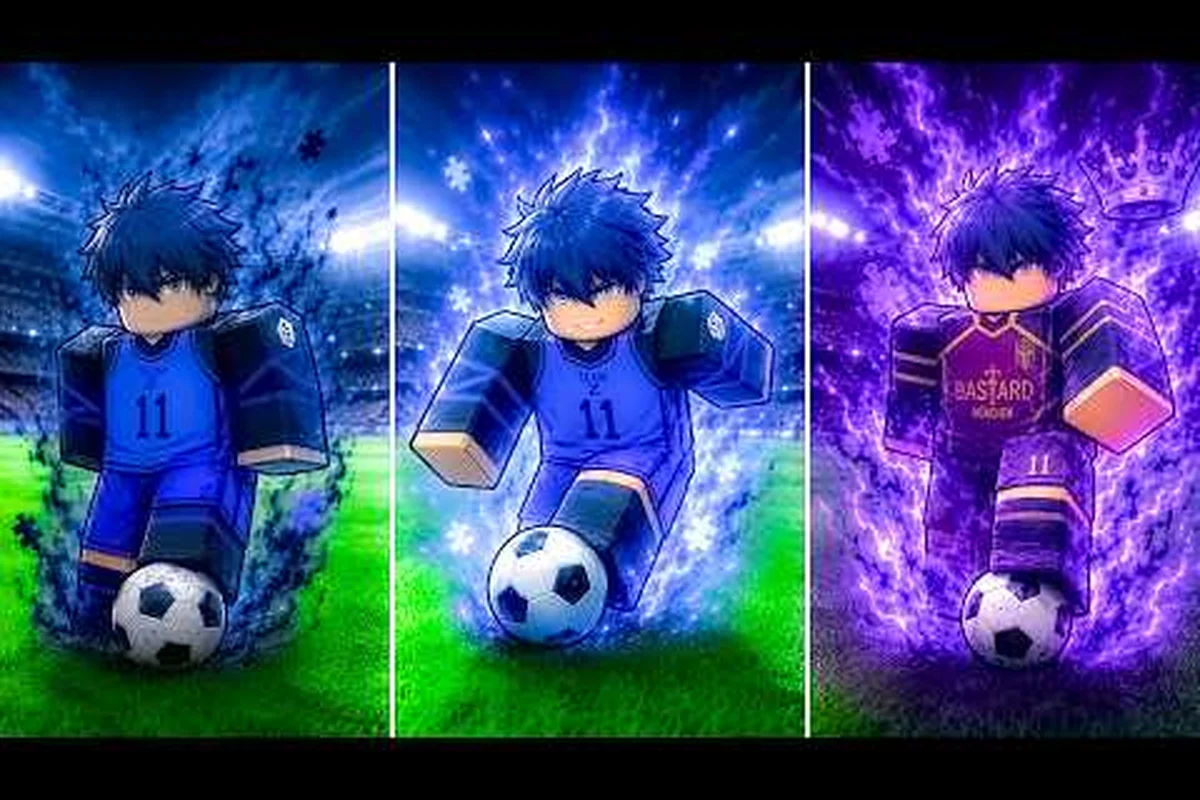
Blue Lock: Rivals Isagi Style is built for attackers who read space, arrive at the right moment, and turn imperfect passes into chances. Because the game is a five-versus-five Roblox football experience, mastering timing matters as much as raw speed, so these tactics can directly improve your team’s attacking flow.
Isagi Style Fundamentals
The blue lock rivals isagi style centers on positional anticipation rather than constant solo dribbling. According to the official game page for Blue Lock: Rivals, Isagi reads space and arrives where the ball is likely to be, while players select a Style before queueing and use that Style’s available abilities during the match.
That makes Isagi most useful when he remains close to the action without becoming predictable. A forward who constantly stands directly in front of the goal may stay involved but provide little variety. Isagi performs better when he alternates between supporting a passer, drifting beyond a defender, and moving toward a loose ball.
| Isagi attacking priority | What it looks like | Practical benefit |
|---|---|---|
| Space reading | Watching defenders and the ball carrier | Reaches useful passes before they become crowded |
| Timing | Starts runs before the pass is released | Creates options instead of waiting for the ball |
| Link play | Positions near passing lanes | Supports combination attacks with teammates |
| Loose-ball response | Tracks where possession is likely to move | Turns defensive mistakes into forward opportunities |
| Final action | Chooses a shot or safe release | Avoids forcing every chance |
Reading the match before making the run
A successful Isagi player scans in a consistent order. First, identify which teammate has possession, then locate the nearest defender, and finally consider the channel behind that defender. This process is more reliable than reacting to the ball alone because it gives the player time to decide which movement will matter.
The official page does not document exact ability names, cooldowns, damage, or specific inputs. Those details should be verified in game rather than inferred. The practical role remains clear: Isagi is a space-reading attacker, so use movement to support possession and punish defensive gaps.
Why timing beats predictable speed
Many players equate an attacking Style with simply running faster. In a compact five-versus-five match, however, arriving at the wrong moment can leave a striker isolated. Isagi’s value comes from choosing the right destination: a defender’s blind side, a trailing pocket, or the space created by another player drawing a challenge.
| Run choice | Timing | Why Isagi benefits |
|---|---|---|
| Behind a defender | As possession turns toward the flank | The defender must rotate or recover |
| Across the center | While a teammate draws attention | Creates a safer passing angle |
| Into a loose-ball zone | Immediately after a block or interception | Allows the attacker to arrive rather than chase |
| Short support run | During buildup near midfield | Gives the ball carrier an outlet |
Players can compare broader options through the Blue Lock: Rivals styles list, but Isagi’s identity remains more about decision-making than a simple physical trait. His style shines when he reads the block and shifts the attack toward a defender’s blind side, trailing pocket, or loose-ball zone; for example, a short support run can give the ball carrier an outlet while an across-the-center run exploits a teammate drawing the challenge. Unlike a fixed role defined mainly by raw pace, Isagi’s contribution comes from choosing the destination that makes the next pass, shot, or recovery possible.
Isagi Style Positioning Guide
Positioning determines how often Isagi can apply his defining strength. The best location is rarely a fixed point on the pitch because teammates, opponents, and possession can change every few seconds. Instead, treat positioning as a relationship between the ball, the nearest defender, and available passing lanes.
Supporting the ball carrier
When a teammate controls the ball, Isagi should offer a short option rather than remain far beyond the play. Moving toward the carrier can force a defender to step outward, which may open the forward channel. If the pass arrives, he can continue his run immediately instead of stopping after receiving.
This is the support-and-release pattern: approach enough to provide a connection, then move into space before the defender can reset. The pattern works especially well when the carrier faces pressure because it shortens the passing distance and gives the team a safer outlet.
Attacking the blind side
An attacker becomes dangerous when his movement is difficult to track. Rather than running directly toward the ball, Isagi can begin near one defender and continue behind a second. This diagonal route uses the space between defenders and can produce a cleaner reception because the passer’s lane opens as the first defender shifts.
Watch for the defender’s shoulders rather than the ball. When a defender turns toward the carrier, the space behind that player becomes more valuable. A well-timed diagonal run exploits that reaction, while an early run into the defender’s view may be closed immediately.
Rotating with possession
Rotation keeps Isagi from becoming predictable. If he makes the same forward run every possession, defenders can anticipate him. A three-position rotation—wide support, central attack, and trailing recovery—can preserve his involvement without asking him to make every run at maximum speed.
| Match state | Preferred position | Reason |
|---|---|---|
| Own team has controlled possession | Between lines or behind the main defender | Offers a forward passing target |
| Ball is on the flank | Near the top of the penalty area | Creates a cutback or cross option |
| Team is under pressure | An accessible passing lane | Provides a safe outlet |
| Possession changes | Nearest plausible loose-ball zone | Supports an immediate transition |
| Defense is compact | Wider or deeper than usual | Draws a defender away from the center |
Protecting the transition
The blue lock rivals isagi style can help when a team wins possession, but players should avoid assuming every recovery starts with a direct shot. After an interception or loose ball, the immediate danger may come from a counterattack. Isagi’s job can be to locate that danger, move into recovery support, and then advance once the team establishes enough control.
This two-stage movement prevents the attacker from being caught behind the play. It also allows teammates with distinct roles to manage the transition. For example, a dedicated dribbler may be better equipped to carry the ball away from pressure, while Isagi reads where the next pass or rebound is likely to arrive.
Isagi Style Match Tactics
Isagi’s tactics depend on reading the situation rather than memorizing a rigid route. The goal is to arrive where the ball will be while still reacting honestly to what teammates do. A useful cycle includes scanning, choosing a zone, accelerating into the run, and then assessing the next touch.
The four-stage attacking cycle
Begin by scanning the entire field, including the ball carrier, supporting players, and the last defensive line. Next, select the most valuable zone rather than the nearest one. During the run, maintain awareness for defensive reactions, and after the touch, decide whether to combine, carry, or release the ball.
This cycle prevents the common mistake of chasing every pass. Isagi should prioritize opportunities with value: a pass that bypasses a defender, a rebound after a block, or a situation where his body position protects the ball from the nearest opponent.
| Stage | Player decision | Practical result |
|---|---|---|
| Scan | Read ball, teammates, and defenders | Identifies the developing danger |
| Select | Choose a space with a clear purpose | Avoids meaningless forward runs |
| Commit | Start before the pass becomes obvious | Gives the passer a usable option |
| Assess | Judge the touch after reception | Creates a second action |
Creating combinations with teammates
A simple exchange can make Isagi feel more effective. He moves toward the carrier, receives the ball, and immediately releases it toward a forward teammate before the defense can recover. The third movement can be Isagi’s own run beyond the original position, creating a triangle rather than a straight pass.
The official game page confirms that the experience is played with ten players, five on each side, so compact spacing is unavoidable. In such a format, triangles and close support can be more valuable than isolated sprints. The Blue Lock: Rivals master class styles overview can help with rarity context, but a high-rarity label does not replace good positioning.
Pressing the second ball
Goals often originate from the space immediately after a first contact. When a teammate takes on a defender, Isagi should identify whether the ball may be blocked, deflected, or released. If the likely loose-ball point lies close to him, moving toward it can create an immediate second option.
Avoid following the opponent too tightly, though. If the first defender handles the challenge, chasing directly can leave the attacking half open. The better choice is often a diagonal approach that covers the interception lane while preserving a view of the ball carrier.
Managing match tempo
Isagi does not need to sprint during every possession. A controlled approach can make him harder to mark because he moves in relation to the ball. Slow periods are useful for repositioning, scanning defenders, and building a passing relationship with nearby teammates.
The practical tempo rule is simple: run when your movement changes the defender’s options. A diagonal burst into open space can split two markers and give Isagi a cleaner direct shot, while a short run behind a center back may drag the last defender away from a teammate’s loose ball. If the run opens no pass, occupies no defender, or threatens no rebound, slowing down may produce a better next action, such as laying the ball off to a teammate’s shooting lane or waiting for a counterpress to expose a passing lane.
Isagi Style vs Other Attackers
Comparing Styles reveals why Isagi feels different from speed-first or shooting-first attackers. These comparisons describe the verified roster’s broad identities, not undocumented ability statistics. Official details such as cooldown values and damage are not documented on the game page, so verify them in game.
| Style | Core identity | Isagi comparison |
|---|---|---|
| Isagi | Reads space and arrives where the ball will be | Best when positioning and timing match the match state |
| Bachira | Dribble-first, unpredictable control | More dependent on winning the ball in tight areas |
| Chigiri | Speed reaches loose balls and breaks lines | More direct when raw running creates separation |
| Nagi | First-touch control, trapping, aerial finishes | Better suited to controlling receptions and high balls |
| Barou | Power and direct shooting | More willing to create a shot independently |
| Niko | Not listed on the verified roster information available here | Verify current availability and gameplay in game |
Versus the blue lock rivals bachira style
The blue lock rivals bachira style emphasizes dribbling and unpredictable control. Compared with Bachira, Isagi should not try to copy the same close-ball chaos because his advantage comes from operating around the ball carrier. He can support a dribbler by taking the defender who is blocking the combination pass.
A strong partnership involves one player drawing a challenge while the other attacks the vacated channel. Isagi’s role is to notice that displacement and arrive before the defense reorganizes, rather than forcing another dribble through an already crowded area.
Versus the blue lock rivals chigiri style
The blue lock rivals chigiri style centers on speed for loose balls and line-breaking runs. Isagi can complement this by staying connected to the middle. If Chigiri stretches the defense along a line, Isagi may read the opening space behind the shifted players and offer a central option.
Chigiri may appear faster in an isolated race, but Isagi offers a different timing advantage with spatial awareness and vision. His best run often begins when the defender’s attention shifts, so following every movement at full speed is unnecessary. For example, if Chigiri draws a defender toward the touchline, Isagi can delay his acceleration and attack the vacated central lane, using a quick direct shot once the defensive line reacts to the wide run. This makes Isagi’s flow less about raw sprint speed and more about reading Chigiri’s line-breaking impact, then arriving where the defense has temporarily lost its shape.
Versus the blue lock rivals nagi style
The blue lock rivals nagi style features first-touch control, trapping, and aerial finishing. Isagi should understand when a teammate needs a controlled reception rather than another immediate forward pass. Holding width or drifting behind the play can give Nagi a cleaner target.
When the ball is airborne, Isagi should read its trajectory and projected landing point rather than camping directly underneath it. For example, if a teammate is facing pressure with his back to goal, Isagi can move toward the second-phase zone to attack a possible deflection or loose clearance, using a quick first touch to convert it into a shot. The key is to preserve the receiver’s first-touch opportunity while arriving with a clear attacking angle, avoiding the turnover risk of crowding the same landing area.
Versus the blue lock rivals barou style
The blue lock rivals barou style emphasizes power and direct shooting. Isagi should avoid taking every touch when a stronger finisher is better placed. Instead, he can occupy the central defender, provide a short release, and look for the rebound or deflection created by the shot.
The two roles become especially effective when Isagi and Barou execute a front-to-back combination: Barou drives his Direct Shot through the central channel, while Isagi uses off-ball movement to occupy the goalkeeper’s blind side and central defenders. If the first shot is blocked, Isagi can immediately target the loose ball or deflection, turning Barou’s pressure into a second-chance opportunity without forcing an unnecessary one-on-one finish.
Understanding the blue lock rivals niko style
Niko is included in the locked search terms for this guide, but the verified roster information available for the article does not identify Niko among the documented Styles. This distinction matters because community references may use the name for a character, a release, or an older version without proving its current availability.
Check the live game page and the in-game Style selection screen before building a team around that label. Until a current official or page-verified entry confirms it, it is safest to treat the blue lock rivals niko style as not documented here, not as a guaranteed option.
Isagi Style Improvement Plan
Improving requires a repeatable routine that trains recognition as well as execution. The official Roblox group describes the project as an unofficial fan tribute, and its community information reflects the large player audience around the game. The Blue Lock: Rivals Unofficial Fans group page also emphasizes that the experience is not endorsed by the anime’s rights holders or Kodansha.
Track the defender, not only the ball
During practice, select one defender and observe how they react to the carrier. Notice whether they step toward the ball, retreat toward goal, or shift across the passing lane. Isagi benefits from recognizing these reactions because each one identifies a different space.
A useful drill is to pause mentally at the moment a pass is released and predict the receiver’s next action. Reviewing that prediction after the play develops the visual habits required for advanced positioning. The aim is not to predict everything perfectly; it is to make better decisions sooner.
| Observation | Likely Isagi response |
|---|---|
| Defender steps toward the carrier | Attack the space behind the defender |
| Defender drops toward goal | Move laterally or hold a passing option |
| Midfield defender steps out | Find the opposite channel |
| Fullback remains wide | Time a run into the inside lane |
| Teammate is tightly marked | Offer a nearby outlet |
Practice three-pass combinations
Begin with a simple wall pass and add the third movement only after the first exchange is secure. Isagi moves toward the passer, redirects the ball, then continues toward the space behind the defensive line. This develops timing on both sides of the reception.
A second drill uses a one-two pass near midfield. The receiving player lays the ball back, and Isagi turns immediately for the return. The exercise helps him connect rather than merely collect passes, which is valuable in compact five-versus-five matches.
Improve decision speed
Review each failed attack and assign a cause: poor timing, wrong zone, unnecessary turn, or weak support. “Bad luck” is not a useful category because it does not identify a repeatable correction. If Isagi frequently receives the ball facing his own goal, his route or pass choice probably needs adjustment.
The most common correction is usually to slow the first step of a run. That lets the attacker observe the defender’s reaction and change direction with less wasted movement. Acceleration is most valuable after the intended space becomes clear.
Use live community examples carefully
Community content can demonstrate possible play patterns, but individual opinions may become outdated after balance changes. KTG Gaming’s test of every Style provides a dated community perspective on the roster, while the official page should remain the authority for current game facts.
Treat observed behavior as evidence of how players are using Styles, not proof of permanent mechanics. For Isagi Style specifically, note whether your direct shot creates a viable goal through spatial awareness and teammate positioning, rather than assuming every successful finish confirms a fixed combo. Compare community demonstrations with the live game, record which sequences still work in current matches, and account for balance changes that may alter Isagi’s direct-shot damage, movement flow, or goal-scoring conditions.
A simple post-match checklist
Reviewing three questions after each match creates faster improvement than watching only highlights. First, determine whether Isagi’s runs created a passing option. Second, identify whether his positioning helped teammates. Third, decide whether he arrived at dangerous balls without excessive chasing.
If all three answers are negative, simplify the plan. Stay closer to the carrier, select one clear run, and focus on timing rather than speed. Rarity and ownership information can be explored separately through the Blue Lock: Rivals style rarity guide, but the highest-return improvement is usually better positioning.
Isagi Style Summary
The blue lock rivals isagi style succeeds when movement reflects the state of the match. Read the ball, watch the defender’s reaction, attack the space that movement creates, and arrive before the possession becomes crowded. Whether combining with a Bachira-style dribbler, supporting Nagi on a controlled reception, or reading the space created by Chigiri’s run, Isagi rewards patience and precise timing.
Mastering Isagi is not about claiming every touch or sprinting constantly. It is about becoming a reliable link between possession and opportunity. Practice the support-and-release pattern, the three-pass combination, and the second-ball approach, then review which movements actually influenced a defender.
Frequently Asked Questions
What is the best role for the blue lock rivals isagi style?
The strongest role is as a space-reading attacker who links passes, supports the carrier, and attacks dangerous spaces. Isagi performs best when his runs open passing lanes or punish a defender’s reaction, rather than when he stays in one fixed position or demands the ball on every touch.
Is blue lock rivals isagi style better than the bachira style?
Neither Style is universally better because they solve different problems. Isagi focuses on timing, positioning, and combinations, while Bachira emphasizes unpredictable dribbling and close control. Isagi is generally stronger when the ball belongs to a teammate and space is available; Bachira can be more valuable when one-on-one control creates an advantage.
How should I use blue lock rivals isagi style in defense?
Use Isagi’s reading ability to track the likely receiver and the next loose-ball location instead of blindly chasing the current ball carrier. Start near the danger, cover a plausible interception point, and move forward when possession changes. His positioning can help the team recover without forcing an unrealistic constant sprint.
Does blue lock rivals nagi style work better for beginners?
A Nagi-style approach may be easier when the priority is controlling a reception, trapping a ball, or finishing aerially. Isagi still rewards beginners because its basics are visible positioning and timing, although new players should begin with simple support runs before attempting complex diagonal movement. Exact abilities and balance details should be verified in game.
Can blue lock rivals barou style and Isagi work on the same team?
Yes, because their strengths are complementary. Barou’s power and direct shooting can create a shot, rebound, or defensive reaction, while Isagi can attack the resulting space and support combination play. Their coordination is strongest when Barou occupies the central scoring route and Isagi remains available for the second phase.