
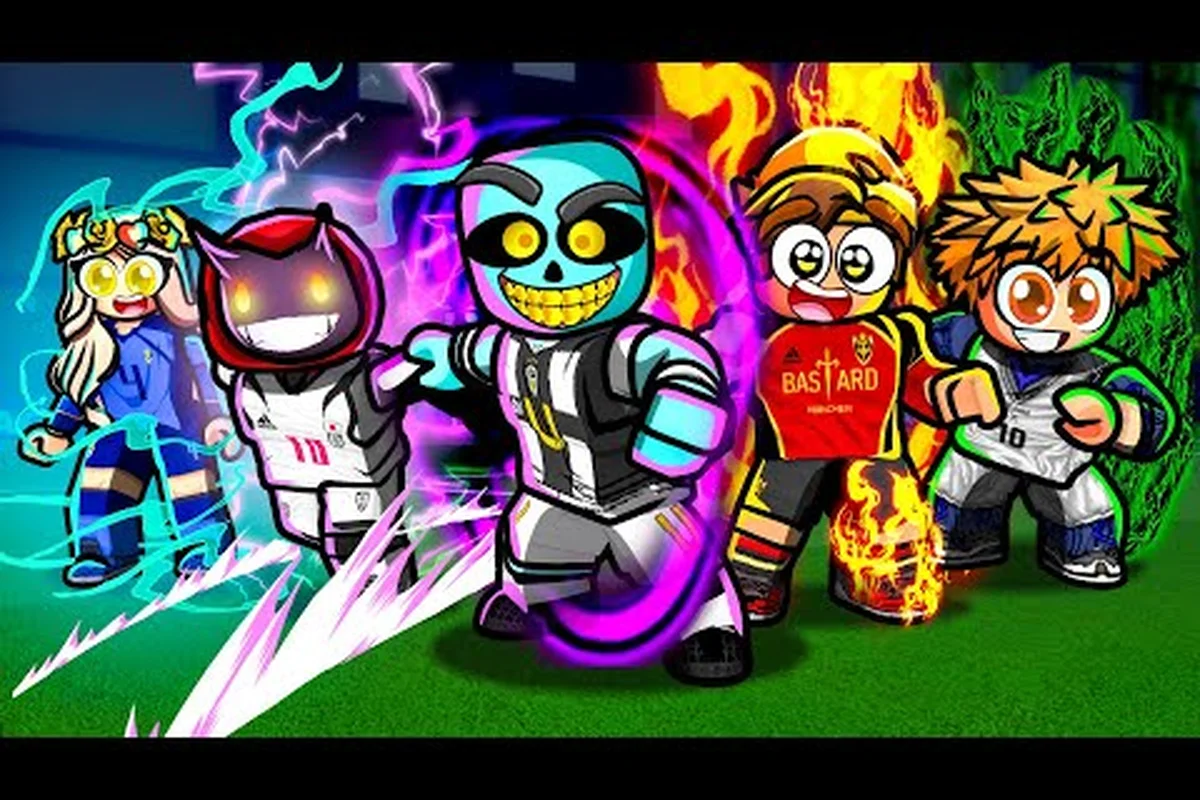
The blue lock rivals player count shows a large, active Roblox football audience, which matters because it reflects both community interest and your odds of finding teammates. Check the live figures, server size, and community activity to understand what the numbers really mean.
Player Count: What the Numbers Show
The official Roblox page recorded 18,462 concurrent players when checked on November 1, 2026. That snapshot confirms that Blue Lock: Rivals has a meaningful live audience despite being an unofficial fan-made experience. It also showed more than 5.02 billion total visits, indicating that its reach extends far beyond the players currently online.
The Blue Lock: Rivals page on Roblox as of November 2026 is the best source for current figures because its player and engagement totals can change throughout the day. A single reading is therefore a snapshot rather than a permanent statistic. Even so, an 18K concurrent-player count and billions of recorded visits make this one of Roblox's more noticeable community-driven football experiences.
| Official-page metric | Figure recorded on November 1, 2026 | What it indicates |
|---|---|---|
| Concurrent players | 18,462 | Players connected around the time of the check |
| Total visits | 5,023,398,888 | Long-term reach across visits and return play |
| Favorites | 6,321,696 | Players who marked the experience for later |
| Likes | 10,276,194 | Positive page-level engagement |
| Dislikes | 358,317 | Negative page-level engagement |
| Server size | 10 players | Five players per team |
Live Players Versus Total Visits
Concurrent players measure who is online at a particular moment, while total visits accumulate over the experience's entire published history. Treating the two figures as equivalent would produce a misleading interpretation. Thousands of people can be interested in the game without being connected to Roblox on a given day.
Total visits also do not reveal unique human visitors. One player can revisit the experience repeatedly, so the strongest popularity evidence comes from combining several signals: concurrent attendance, favorites, likes, and the size of the official community group. These figures should be presented as page-verified snapshots, not permanent guarantees that every server will be equally busy.
The Unofficial Status Matters
Blue Lock: Rivals is a fan-made Roblox football experience operated by Blue Lock Rivals Unofficial Fans. The official game page identifies it as an unofficial tribute and states that it is not endorsed by the anime's rights holders or Kodansha. The developer’s official Roblox group had roughly 32.8 million group members at the time of research.
That status does not make the player count less meaningful. It simply clarifies the nature of the project: a community-built adaptation centered on soccer mechanics and character Styles. Anyone evaluating a blue lock rivals review should understand that official anime licensing and the quality of the fan community are separate questions.
Server Size and Matchmaking
The game's server size is 10 players, creating a five-on-five football match. This structure makes the blue lock rivals player count especially useful when estimating active server density. It also shows why a large total audience does not guarantee an easy queue in every region or Style category.
A hypothetical illustration helps explain the relationship. If 18,462 people are online and the entire audience were spread evenly across full 10-player matches, the game could theoretically support about 1,846 simultaneous matches. In practice, the number of available matches will differ because players are distributed among queues, regions, server instances, and match stages.
| Player-count scenario | Approximate 10-player matches if evenly divided | Practical interpretation |
|---|---|---|
| 1,000 concurrent players | 100 | Smaller live audience with fewer server openings |
| 5,000 concurrent players | 500 | Active coverage with more visible matchmaking activity |
| 10,000 concurrent players | 1,000 | Strong population across multiple queues |
| 18,462 concurrent players | 1,846 | Large snapshot supporting substantial community activity |
These are capacity illustrations, not documented server counts. The official page gives the player number and server size but does not publicly state how many server instances are open at a given moment. Queue size, region, Style preference, and whether you join an existing match or begin one can all affect the experience.
Why a Popular Game Can Still Have a Slow Queue
Server population is divided, not cloned. A large concurrent audience does not place every eligible player in the same queue. Players who select different character Styles may also enter separate pools, although the official page does not document the exact matchmaking configuration.
Geography adds another layer. Roblox experiences may feel more responsive when the player is connected to an appropriate regional server. A high global count can therefore coexist with occasional delays for someone in a smaller region or choosing a less common Style. Anyone looking into blue lock rivals how popular the game is should compare the official count with their own queue experience rather than assuming every player sees the same waiting time.
What Five-on-Five Changes for Players
The five-player team format keeps individual positioning relevant without recreating the scale of an eleven-player match. Goals determine the score, so possession, shot creation, defending, and transition play directly affect the result. A busy server gives players more opportunities to test those ideas against varied opponents.
Before entering a match, selecting a Style is part of the core setup. The official game page indicates that the chosen Style determines which abilities are available during play. New players can use the beginner guide to Blue Lock: Rivals to understand the initial setup before spending time testing abilities in an active queue.
Reading the Community
The blue lock rivals community is visible through several signals, including the official group, community video coverage, favorites, likes, and recurring gameplay discussion. These signals suggest broad interest, although they should not be treated as a direct survey of every active player. Some groups report member totals while individual player opinions remain scattered across community content.
Community sources are especially useful for subjective topics such as which characters feel satisfying, whether a Style suits a player's habits, or how new mechanics feel in practice. They are less reliable for exact damage values, cooldowns, prices, or balance figures that are not documented. A useful blue lock rivals 2026 guide therefore separates verified facts from community impressions and advises readers to confirm current details in the game.
| Community signal | What it measures | Appropriate use |
|---|---|---|
| Official Roblox group membership | Reach of the fan organization | Context for community scale |
| Favorites and likes | Page-level interest and sentiment | Popularity overview |
| Concurrent players | Current activity at one moment | Matchmaking context |
| Player-created videos | Subjective coverage and interest | Discovering community opinions |
| In-match reports | Firsthand play experiences | Situational feedback, clearly attributed |
Community Feedback Versus Documented Facts
Verified facts come from the official Roblox game page, including the 5v5 format, server size, launch date, Style selection, and Flow and Awakening systems. Community reports describe how players feel about those systems and may change after updates. A reviewer should clearly label the distinction instead of presenting a dated impression as a permanent rule.
For example, the game page describes Flow as an in-match state that develops through involvement in completed passes, dribbles, and defensive actions. It functions as a temporary window that sharpens touch and movement rather than a permanent buff. Awakening is a separate, limited burst connected to a Style. Community videos can help explain how players use these systems, but their placement suggestions remain opinions that may not reflect later balance changes.
A video such as Floaty 2’s Blue Lock: Rivals tips demonstrates the breadth of player-produced coverage. Treat it as a community perspective, not an authority for undocumented numerical values. Players who want more tactical advice can also compare it with the Blue Lock: Rivals tips overview.
Why the Group Size Is Not the Same as Active Players
The developer's group membership is much larger than the number of people currently playing. Group membership may include followers, former visitors, account holders interested in announcements, and people who only play occasionally. By contrast, the concurrent-player figure offers a narrower view of live participation but covers only one moment.
Neither metric is inherently better. The group total communicates the size of the potential audience and the reach of announcements. The live count indicates current activity but can rise during favorable hours and fall during quieter periods. A balanced blue lock rivals community assessment uses both while acknowledging that neither represents every registered member.
What a Review Should Emphasize
A useful review should prioritize the live product over unsupported claims. The match format is easy to understand, but the experience depends on how Styles feel in motion, how consistently the server population supports matchmaking, and whether players can understand Flow and Awakening without external assistance.
This blue lock rivals review framework also keeps the game's unofficial status visible. It is not an official anime release, and the project should be judged on its Roblox implementation rather than presented as a canonical adaptation. That distinction matters for readers deciding whether the game delivers the football action and character experimentation they expect.
| Review area | Verified focus | What should not be claimed without evidence |
|---|---|---|
| Match format | Five-on-five with a 10-player server | Exact number of active server instances |
| Popularity | Official concurrent-player and engagement snapshots | A permanent daily player average |
| Styles | Players select a Style that shapes available abilities | Specific damage or cooldown values |
| Flow | Temporary involvement-based state | A permanent stat increase |
| Awakening | Limited Style-linked burst | Exact duration or activation cost |
| Licensing | Unofficial fan tribute | Endorsement by rights holders or Kodansha |
Community Strength and Replay Value
The official figures indicate both scale and sustained interest. More than 10 million likes, over 6 million favorites, and billions of visits suggest that players have repeatedly returned to the experience. Those totals do not prove that every update retains the same audience, but they demonstrate a substantial cumulative footprint.
Replay value also comes from Style experimentation. The official page confirms that Style choice affects available abilities, giving players different tools for attacking and defending. The first-match guide for Blue Lock: Rivals can help new players establish a clean routine: choose a Style, learn its available actions, participate in possession, and save Awakening for a decisive moment.
A Practical Popularity Checklist
Before judging whether the community is active enough for you, look at several current signals rather than relying on a lifetime total. Open the official page, note the concurrent-player number, and revisit it during another part of the day. Check whether queues populate consistently for your region and Style. Then watch community videos or read current player reports for recurring issues.
| Question to answer | Best evidence | Reason it matters |
|---|---|---|
| Is the game active right now? | Live concurrent-player display | Indicates current participation |
| Does matchmaking feel healthy? | Your own queue and match experience | Reveals local and Style-specific effects |
| Is the audience large overall? | Visits, favorites, likes, and group size | Shows cumulative reach |
| Are players creating new content? | Recent community videos | Signals sustained interest |
| Are mechanics stable? | Current page details and recent reports | Separates live facts from old impressions |
Checking Popularity Over Time
A single player-count check is only a baseline. To measure change responsibly, record the same metric at comparable times, such as one afternoon and one evening on different days. Keep the date and your own region in the notes, because global traffic and local queue behavior may not move together.
Do not convert one snapshot into an average unless you have collected several measurements. The official page provides a current reading, while community reports can help explain what players experienced at other times. A rising count may reflect a busy period, an update, or ordinary weekend traffic; without historical records, the reason remains uncertain.
A Simple Tracking Log
Use a small table or spreadsheet with a limited set of fields. Tracking the same fields keeps the data comparable and prevents a large lifetime statistic from obscuring what is happening right now.
| Date and time | Concurrent players | Region | Style selected | Queue result | Notes |
|---|---|---|---|---|---|
| Example entry | 18,462 | Your region | Chosen Style | Match found | Official-page snapshot |
| Second entry | Your reading | Your region | Chosen Style | Wait or match | Record exact time |
| Third entry | Your reading | Your region | Chosen Style | Wait or match | Compare later periods |
| Fourth entry | Your reading | Your region | Chosen Style | Wait or match | Note unusual disruption |
Because the official server list and queue behavior can change at any time, these observations should be treated as personal measurements rather than guarantees. The example figures show the format, not predictions for future sessions.
Turning Popularity Into Better Session Planning
A large player count makes it reasonable to schedule a longer session, while the 10-player server format means teamwork still matters once a match begins. You can use the Blue Lock: Rivals training drills to refine your movement and possession decisions separately, then apply those skills when a populated queue gives you more opponents with different play patterns.
If you encounter a slow queue, check the official page once more, verify your region, and avoid assuming the entire game is empty based on one wait. A Style choice may also affect the pool you enter. The most reliable conclusion comes from your own live test compared with the official global snapshot.
Key Takeaways for Fans
The blue lock rivals player count recorded 18,462 concurrent players on November 1, 2026, alongside more than 5.02 billion visits and over 10 million likes. These figures support calling Blue Lock: Rivals a popular Roblox community experience, while the day-specific nature of the count prevents treating them as permanent averages.
The official server size is 10 players, producing five-on-five matches with goals as the score. Matchmaking depends on how that audience is divided, so a strong global count does not guarantee identical waits for every region or Style. The unofficial status, large fan group, community videos, and player discussions further explain why blue lock rivals how popular can be answered with both platform statistics and qualitative community evidence.
Frequently Asked Questions
How many players are in Blue Lock: Rivals?
The official Roblox page recorded 18,462 concurrent players when checked on November 1, 2026. Each server supports 10 players, with five on each team. Because concurrent attendance changes throughout the day, open the official game page for the current count rather than treating that snapshot as a permanent daily average.
Is Blue Lock: Rivals an official anime game?
No. It is a fan-made Roblox experience published by Blue Lock Rivals Unofficial Fans. The official game page describes it as an unofficial tribute and states that it is not endorsed by the anime's rights holders or Kodansha. This distinction does not affect its public engagement figures, but it should be clear in reviews and community discussions.
Does a high player count guarantee fast matchmaking?
No. The official concurrent count is global, while your queue can depend on region, Style, server availability, and other population factors. A large audience supports more active matches, but it does not guarantee that every queue receives players equally. Check the live official count and compare it with your own queue experience during different periods.
How popular is the Blue Lock: Rivals community?
The available evidence points to substantial popularity: more than 5.02 billion visits, 6.3 million favorites, over 10 million likes, and roughly 32.8 million members on the developer's official group as of November 1, 2026. Group membership and lifetime visits show reach, while concurrent players better indicate live activity.
Can the player count predict which Styles are strongest?
Not reliably. The official page confirms that players select a Style before queueing and that it determines available abilities, but it does not publish the number of players in each Style queue. Community videos and player reports can offer subjective context, yet they should not be treated as verified balance data or a substitute for checking the live game.