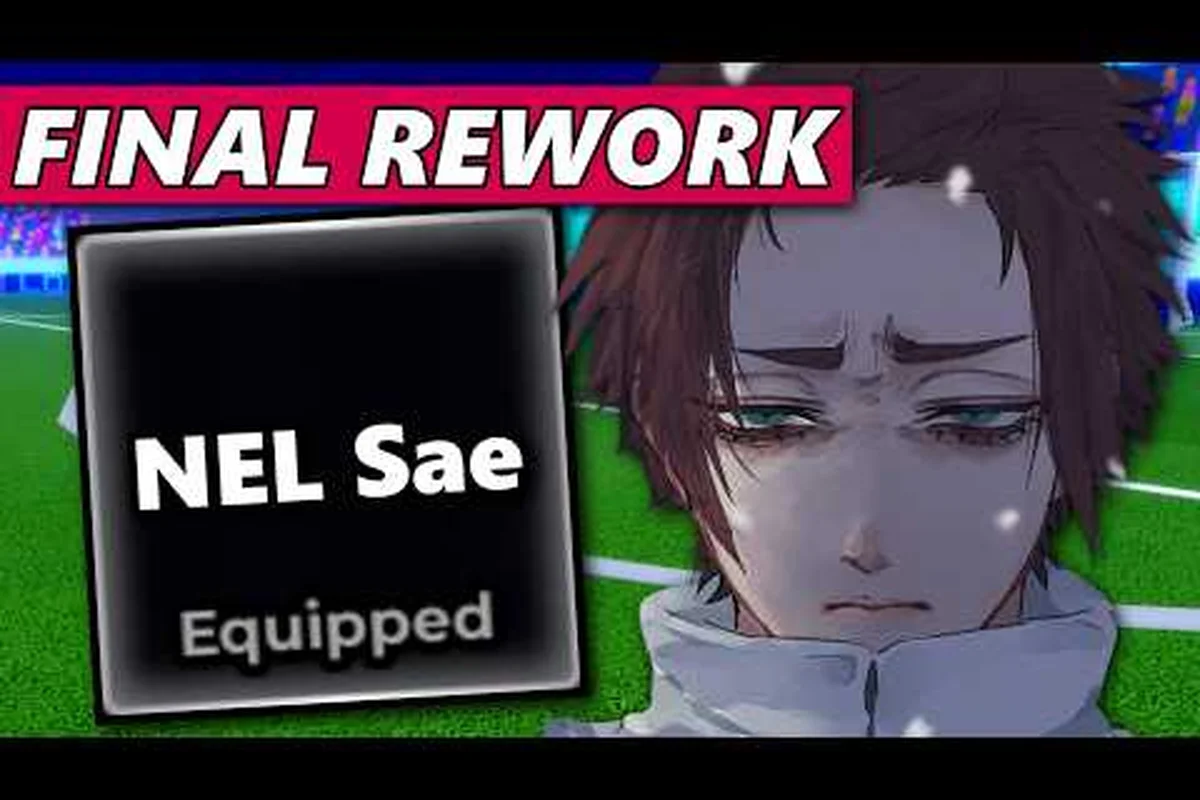
Blue Lock: Rivals sae tier placement matters because Sae’s reworked passing and vision can reshape team play without relying on constant finishing. Compare his value with Shidou, Nagi, Barou, and Chigiri to choose the right Style for each 5v5 matchup.
Sae Tier Placement and Role
The current Blue Lock: Rivals sae tier argument centers on role value rather than one explosive ability. Sae is associated with passing and vision, and community reports during the 2026 cycle indicate that his rework improved his ability to influence possession. That matters in a five-on-five match because one well-timed release can create a shot for a teammate who has better finishing options.
This ranking uses the community framework recorded for the game: S-tier styles can shape a match individually, A-tier styles are dependable fits for most teams, B-tier styles remain useful in specific setups, and C-tier styles need favorable conditions or a highly capable pilot. These labels are dated community opinions, not developer rankings.
| Tier | General meaning | Sae-related interpretation |
|---|---|---|
| S | Can shape a match alone | Rarely justified without stronger match-specific evidence |
| A | Reliable for most teams | Fits Sae if his passing creates clear chances |
| B | Solid but situational | Works best with runners and stable finishers |
| C | Requires narrow conditions | Relies heavily on teammates and difficult buildup |
The Blue Lock: Rivals complete style tier list provides broader context for this classification. Sae should be judged by the opportunities he creates, not by treating every assist or long pass as equivalent; a chance that gives a teammate a straightforward finish is more valuable than one that merely shifts possession away from pressure.
What the 2026 Rework Changed
The important distinction is that Sae did not need a new Style identity to become more valuable. His established identity is creative passing, and the reported rework sharpened how useful that identity can be within a team structure. A style with better supporting actions can move from situational to dependable without receiving a flashy finishing package.
Players should separate two questions: whether Sae can distribute effectively and whether his team can turn distribution into goals. The first determines his baseline usefulness; the second determines whether he deserves S-tier consideration. Because exact damage, cooldowns, and input details are not documented on the official page, players should verify the current ability behavior in game rather than relying on old videos.
Sae’s Main Strengths
Sae’s clearest advantage is the ability to make teammates better. That is particularly valuable when the rest of the lineup includes players who punish defensive mistakes. Isagi-style spatial reading can exploit a pass directed toward space, while Barou can turn a clean delivery into power. Sae therefore creates value beyond his individual scoring.
| Sae strength | Practical effect | Best teammate fit |
|---|---|---|
| Passing vision | Finds forward routes | Spatial attackers |
| Team awareness | Supports controlled buildup | Possession-oriented partners |
| Indirect chance creation | Rewards a nearby finisher | Shidou, Barou, Kaiser |
| Complementary control | Reduces forced dribbling | Patient technical players |
This table is qualitative because the official material does not publish numerical pass range, accuracy, or cooldown values. Treat it as a role framework rather than a stat sheet. That distinction prevents overstating the rework while still explaining why Sae can remain attractive in competitive matches.
Sae’s Main Weaknesses
Sae’s value can fall when teammates lack a clear finishing target or when the match becomes chaotic. A creative passer cannot consistently manufacture goals if every forward route is crowded. Players who rely on individual dribbling may also prefer a Style with more direct ball control.
The weakest setup is one in which Sae has responsibility for both creative distribution and finishing. The role becomes overloaded, and the team loses the main advantage of his kit. Pairing him with a proven scorer or a mobile runner creates a clearer division of labor and makes the blue lock rivals sae tier more stable across matchups.
Sae Versus Shidou, Nagi, Barou, and Chigiri
A useful blue lock rivals style comparison separates each rival by the problem it solves. Shidou supplies explosive finishing, Nagi offers first-touch control and aerial finishing, Barou provides direct power, and Chigiri attacks space with speed. Sae instead improves the quality of the route into those advantages.
| Style | Primary identity | Finishing emphasis | Team dependency | Best match condition |
|---|---|---|---|---|
| Sae | Passing and vision | Indirect | High | Teammates can exploit forward passes |
| Shidou | Explosive finishing | Very high | Medium | Space appears near the penalty area |
| Nagi | First touch and trapping | Selective | Medium | Service reaches controlled zones |
| Barou | Power and direct shooting | High | Low to medium | A clear shooting lane is available |
| Chigiri | Speed and line breaks | Variable | Medium | Open running lanes punish retreating defense |
The blue lock rivals shidou tier generally reflects a more direct route to goals, while Sae has a broader supporting value. Shidou is easier to justify when a team needs a primary scorer. Sae is easier to justify when the team lacks reliable creation and has at least one dependable finisher.
Shidou: The Explosive Finisher Alternative
Shidou’s clearest identity is explosive finishing, including a limited Halloween variant mentioned in community coverage. Compared with Sae, Shidou reduces dependence on perfect buildup because the Style is designed to punish openings directly. That does not make Sae weak; it makes their roles fundamentally different.
In a blue lock rivals shidou tier comparison, Shidou usually benefits more from a chaotic final third, while Sae benefits from teammates moving intelligently around him. If an opponent keeps the defense compact, Shidou may need several attempts to create separation. Sae can still alter that compact shape by threatening a pass behind the line. The most important variable is not rarity or appearance; it is whether the team already has enough finishing pressure.
Nagi: The First-Touch and Aerial Alternative
Nagi brings first-touch control, trapping, and aerial finishing according to the verified style roster. This gives him a different path to influence matches from Sae. Sae creates and directs chances; Nagi can receive awkward balls, settle them, and finish from favorable aerial positions.
The blue lock rivals nagi tier is strongest when service can be delivered into the right areas and when the match contains crosses or bouncing balls. Sae may help deliver those balls, making the two styles more complementary than the ranking chart suggests. However, this partnership still depends on Nagi converting or controlling the service. If the team lacks an aerial target, Sae’s broader passing could offer more consistent value.
Barou: The Direct-Power Alternative
Barou is built around power and direct shooting, giving him one of the most immediately understandable attack patterns in the roster. In a blue lock rivals barou tier comparison, Barou often wins when a shooting lane exists because he does not need a perfect chain of passes before attacking the target.
Sae can create that lane by pulling defenders toward a forward pass, but the practical difference is that Barou converts space himself while Sae asks teammates to do so. Barou therefore fits teams seeking a self-contained attacking threat. Sae fits teams with multiple finishers but weak chance creation. A team containing both may be effective, although their role overlap can reduce the benefit of choosing Sae.
Chigiri: The Speed and Open-Field Alternative
Chigiri specializes in speed, loose-ball recovery, and line breaks. He attacks space differently from Sae, who operates through passing vision. The blue lock rivals chigiri tier becomes attractive when defenders leave room behind or beside their formation and when a fast runner can exploit a narrow channel.
Sae and Chigiri can work together because one identifies a forward route and the other accelerates along it. Yet their shared attacking axis can make one style unnecessary. If the team already has direct ball carriers, Sae’s supporting passing may be less distinct than a dedicated runner. If the team struggles to advance through the middle, Sae can open alternate lanes that a speed-focused partner then attacks.
Style Comparison by Team Need
The most accurate ranking changes with the lineup objective. Sae is not a universal first choice, but his reworked passing creates value when a team needs more than one reliable route to goal. The practical tier for Sae depends on teammate quality, defensive shape, and the amount of direct pressure the lineup already provides.
| Team need | Stronger fit | Why |
|---|---|---|
| Create chances consistently | Sae | Passing and vision support possession |
| Finish chaotic chances | Shidou | Explosive finishing converts openings |
| Control difficult deliveries | Nagi | First touch and aerial skills |
| Shoot with power | Barou | Direct attacking profile |
| Break open a compact defense | Chigiri | Speed punishes line breaks |
| Build a balanced attack | Sae plus a finisher | Clear division between creation and scoring |
This table supports the best Styles for each role in 5v5 without pretending that Sae belongs in every lineup. If Sae has no reliable target for forward passes, another creator may provide more value. If the roster already creates plenty of chances, adding Sae can still matter because controlled buildup reduces turnovers.
Best Lineups Around Sae
Sae performs best in a structure with at least one clear attacking destination. A mobile forward can run beyond the defense, while a direct finisher can remain near the box. The two approaches use Sae’s passing differently, so players should choose according to how their partner receives service.
| Supporting partner | Expected Sae contribution | Practical test |
|---|---|---|
| Fast runner | Send passes into space | Can the runner separate repeatedly? |
| Power shooter | Deliver to shooting positions | Is the shot created from control? |
| Aerial target | Provide high service | Can the ball reach a useful height? |
| Technical dribbler | Offer passing alternatives | Does movement free Sae’s passing lane? |
The 2026 rework effect should be judged through team behavior rather than isolated highlight clips. Track whether Sae’s side produces controlled forward attacks, whether teammates receive playable balls, and whether the opposition must shift toward Sae. Those indicators reveal value even when the scoreboard does not show a direct contribution.
When Sae Is Not the Best Choice
Sae becomes a poor selection when the team lacks finishers, depends on constant individual dribbling, or benefits more from immediate shot creation. A style such as Barou may be a better centerpiece in those conditions. Shidou can be stronger when one explosive action is likely to decide the match, while Chigiri may fit matches defined by large open areas.
The current meta also changes faster than a fixed tier chart can communicate. Players can consult the Blue Lock: Rivals patch and meta overview for context on how reworks alter the broader environment. Still, the community ranking remains an opinion snapshot. The Blue Lock: Rivals official Roblox listing is the better authority for the roster and core match structure.
Practical Sae Improvements and Match Routine
Improving with Sae begins with simplifying the passing decision. Rather than forcing difficult balls into narrow gaps, prioritize teammates with room to attack. This approach aligns with the reworked identity: Sae’s value comes from making the next action easier, not from performing a spectacular pass regardless of the resulting possession.
A practical routine should include scanning before receiving, identifying the runner behind the defense, and choosing between the direct forward pass and a short combination. Exact timing and input specifications are not documented, so practice the general action rather than assuming a fixed keybind or cooldown. The goal is to develop dependable decision-making.
Three-Stage Sae Game Plan
| Stage | Sae priority | Common mistake to avoid |
|---|---|---|
| Buildup | Create a safe forward option | Passing without checking teammate movement |
| Transition | Release the ball into space | Holding the ball until a perfect opening |
| Final third | Support the chosen finisher | Forcing a pass that ignores role fit |
This three-stage plan works because it treats Sae as a facilitator rather than the sole attacker. In the buildup stage, his team needs a safe outlet. During transition, the priority is exploiting temporary defensive imbalance. In the final third, Sae should reinforce the teammate best suited to finish.
Training Priorities for Sae Players
Practice consistency before attempting ambitious passing. Players often judge a creative Style by its highlight potential, but competitive usefulness comes from repeatedly delivering playable balls. Sae should make teammates comfortable committing forward because the pass gives them a usable route into space.
The following priorities are useful during training:
-
Scan before receiving so Sae identifies a runner before pressure arrives.
-
Prioritize forward options that advance the team toward the target.
-
Use short combinations when a direct route is closed.
-
Avoid pass-only habits that leave Sae without a scoring or carry plan.
-
Match service to the partner, especially when targeting speed or aerial styles.
Community testing can reveal practical behavior, but exact balance values remain undocumented. The KTG Gaming community video testing Blue Lock: Rivals playstyles demonstrates that players actively compare Styles; its specific conclusions should still be checked against the current in-game version.
Sae Tier Verdict by Competitive Situation
The blue lock rivals sae tier verdict is A-tier under the community framework, with the potential to look stronger in coordinated lineups. Sae’s passing and vision can produce consistent chances, but he lacks the same self-contained finishing identity as Shidou or Barou. His dependence on teammates prevents a defensible S-tier claim without stronger match-specific evidence.
| Competitive situation | Sae verdict | Main reason |
|---|---|---|
| Solo queue without a clear finisher | B-tier | Creative value depends on an outlet |
| Paired with a reliable scorer | A-tier | Clear chance-creation and conversion roles |
| Against compact defensive lines | A-tier | Forward passes can challenge spacing |
| In a fast, open match | B to A-tier | Direct finishers may offer more value |
| Team seeking a complete creator | A-tier | Passing and vision remain distinctive |
This means the ranking is not a verdict on the character’s raw power. It evaluates how Sae performs relative to alternatives in a five-on-five environment. Players who need an all-in-one attacking Style should compare him with Barou, Shidou, or Nagi. Players who need a teammate to make Sae dangerous should embrace the passing identity.
Final Reassessment Checklist
Before locking a Sae lineup, review the match rather than the tier label alone. Consider whether the team has a finisher, whether the opponent creates open space, and whether Sae can provide a passing option that the current partner can use. Also account for the possibility that the opponent already favors a compact defense.
-
Sae is most valuable when controlled passing produces forward movement.
-
Sae is less reliable when the lineup lacks a finishing target.
-
Shidou is the direct explosive-finishing alternative.
-
Nagi excels through first-touch control and aerial finishing.
-
Barou offers the most straightforward power-shooting route.
-
Chigiri is the speed-focused alternative for open spaces.
The blue lock rivals style comparison ultimately favors Sae as a team organizer with A-tier consistency, not as a guaranteed goal scorer. His post-rework value comes from making better attackers and cleaner attacks possible. When paired wisely and judged within a practical team structure, he can anchor a strong offensive identity.
Frequently Asked Questions
Where does Sae rank in Blue Lock: Rivals?
Sae sits in A-tier according to the community framework used here. His passing and vision create consistent attacking value after the reported 2026 rework, although he depends more on teammates than direct finishers such as Shidou or Barou. His placement rises when a reliable partner can exploit his forward passes and falls when the lineup lacks a clear attacking target.
Is Sae stronger than Shidou in Blue Lock: Rivals?
Neither Style is universally stronger because they solve different problems. Sae creates opportunities through passing and vision, while Shidou applies explosive finishing when space appears. Sae is stronger in a balanced team with dependable attackers, while Shidou offers more self-contained scoring power. Compare both against the lineup’s need rather than treating either Style as a universal upgrade.
How does Sae compare with Nagi and Barou?
Sae contributes controlled chance creation, while Nagi specializes in first-touch control, trapping, and aerial finishes. Barou centers his game on power and direct shooting. A Sae-led attack works best when teammates can receive and finish his passes, whereas Nagi and Barou can create or convert chances more directly. Pairing Sae with either Style may be effective if their roles remain distinct.
Is Sae an S-tier Style after the rework?
Community opinion supports A-tier rather than a firm S-tier claim. Sae’s rework improves his passing-and-vision value, yet his impact still depends on teammates occupying useful attacking areas. He becomes especially strong when coordinated movement turns controlled passes into clear chances, but the available information does not establish that he can shape a match alone like an S-tier benchmark.
Should players choose Chigiri instead of Sae?
Chigiri is the better choice when speed, loose-ball recovery, and line breaks are central to the match. Sae is stronger when the team needs controlled distribution and coordinated forward attacks. Both can work together, although choosing only one favors either open-field acceleration or structured chance creation. The decisive factor is whether your lineup already provides pace or reliable passing support.